
How Climate Change Is Affecting Frog Populations: A Detailed Analysis
Climate change is significantly impacting frog populations worldwide. Rising temperatures and changing weather patterns are causing frogs and toads to age faster, leading to a decrease in their populations.
In the Central Amazon, even common frog species that are not typically in danger of extinction are showing declines, pushing these ecosystems closer to their limits.
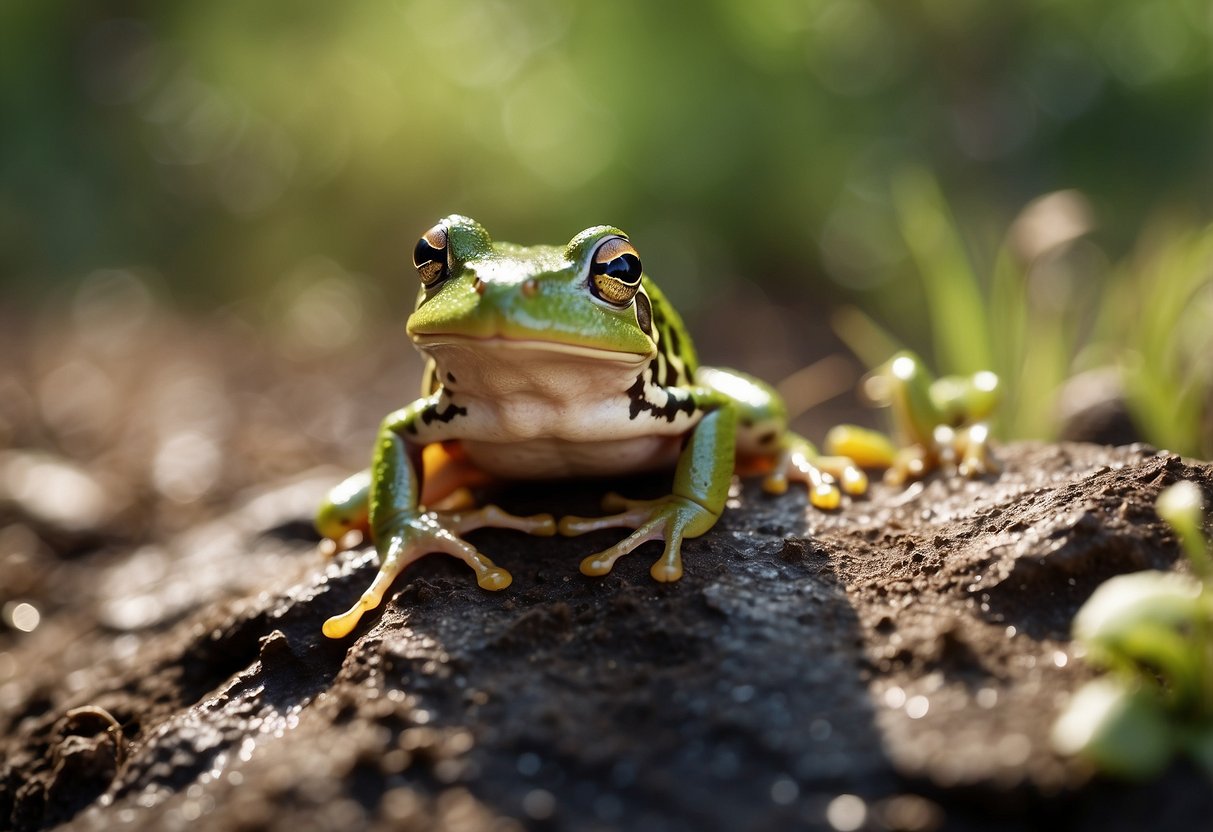
The decline of frog populations isn’t limited to just changes in temperature.
Habitat loss and diseases are also major factors. For example, infections like the fast-spreading fungal pathogen are devastating frog communities globally.
Climate change exacerbates these challenges, making it harder for frogs to survive and reproduce.
Given these pressures, it is crucial to focus on conservation strategies that address both climate change and habitat preservation.
Researchers and policymakers must work together internationally to develop effective measures to protect these vital amphibians.
Key Takeaways
- Climate change accelerates aging in frogs and reduces their populations.
- Habitat loss and disease compound the threats posed by climate change.
- International collaboration is essential for effective conservation strategies.
Overview of Climate Change Impacts on Ecosystems
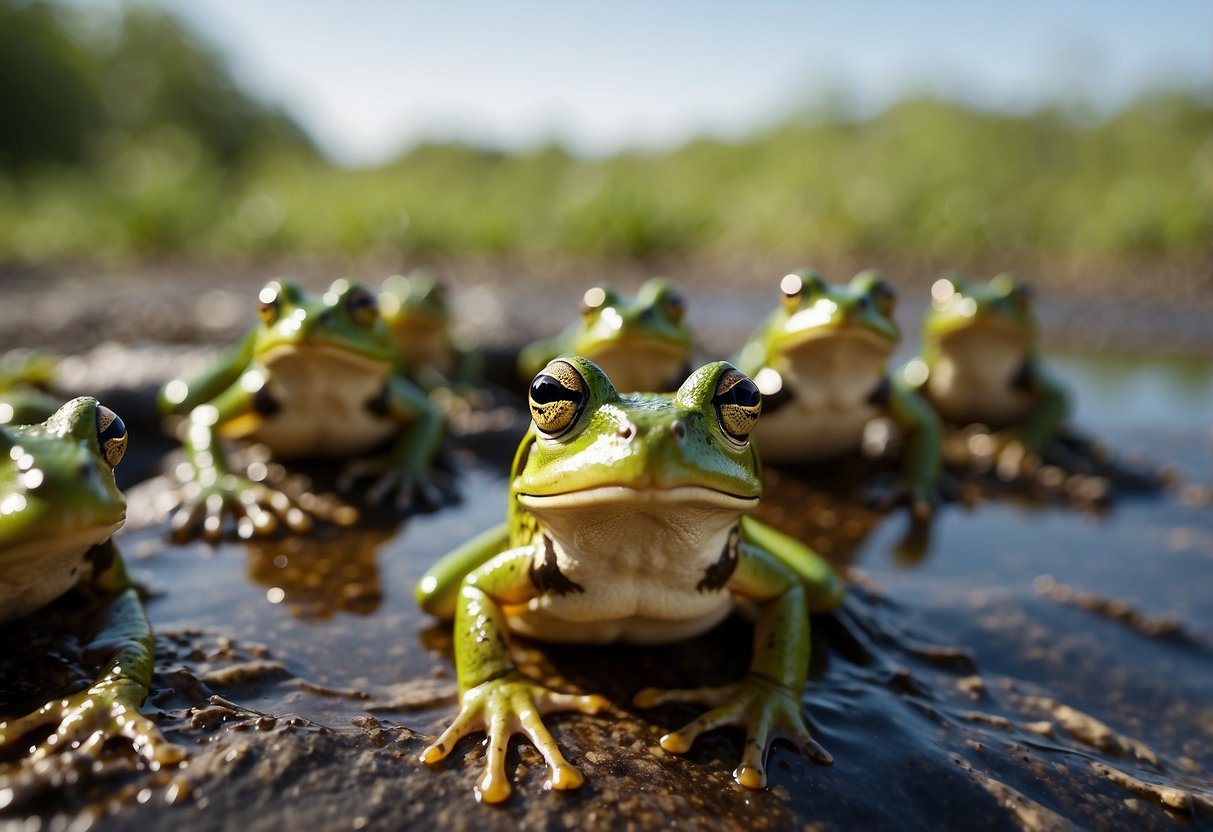
Climate change is having a significant impact on ecosystems around the world. As temperatures rise, both terrestrial and aquatic systems are experiencing shifts in their structure and function.
Invasive Species Spread
Warmer temperatures are enabling the spread of invasive species, which can outcompete native plants and animals.
For example, some non-native insects that thrive in warmer climates are expanding their range, disrupting local ecosystems.
Altered Species Interactions
Changes in temperature and precipitation affect how species interact with each other.
Some species may become more dominant, while others struggle to survive. This can lead to a loss of biodiversity as some species are pushed out of their habitats.
Changes in Phenology
The timing of biological events, like flowering or migration, is shifting.
Many species rely on specific cues, such as temperature, to initiate these events.
As climate changes, these cues are disrupted, leading to mismatches in ecosystem interactions.
Habitat Loss and Fragmentation
Many habitats are shrinking or changing, making it difficult for species to find suitable living conditions.
Forests, wetlands, and coral reefs are among the ecosystems most affected. This can lead to smaller, more isolated populations that are at greater risk of extinction.
Ocean Acidification
Increased levels of CO2 are causing ocean acidification, which affects marine ecosystems.
Coral reefs, for instance, are bleaching and dying, which has a cascading effect on the biodiversity and health of ocean habitats.
Increased Frequency of Extreme Events
Climate change is leading to more frequent and severe extreme weather events like hurricanes, floods, and droughts.
These events can cause immediate and long-term damage to ecosystems, reducing their ability to provide essential services.
For more detailed information, you can refer to the US EPA or explore the changes documented by ScienceDirect.
The Biology of Frogs
Frogs have a complex life cycle and specific habitat needs essential for their survival. Reproduction and development also play crucial roles in their biology.
Life Cycle and Habitat Requirements
Frogs begin as eggs laid in water. These eggs hatch into tadpoles, which are aquatic and breathe through gills.
As tadpoles grow, they undergo metamorphosis, developing legs and lungs, and eventually become adult frogs capable of living on land and in water.
Most frogs require moist environments, such as ponds, streams, and wetlands, for breeding and living.
Their skin must stay wet to help with breathing, since they can absorb oxygen through their skin. This dual life, both in water and on land, makes their habitats critical.
Reproductive Biology and Development
Frog reproduction involves external fertilization. Females lay eggs in water, which males then fertilize.
This process is often synchronized with the rainy season to ensure the eggs have plenty of water.
The number of eggs varies by species, but it can range from a few dozen to several thousand.
After hatching, tadpoles grow rapidly, feeding on algae and plant material.
Metamorphosis marks a significant change, as they transform into adult frogs.
This stage includes many changes like developing lungs and losing their tails.
The entire process from egg to adult can take from a few weeks to several months, depending on the species and environmental conditions.
Correlation Between Climate Change and Frog Populations
Climate change significantly impacts frog populations through shifts in global temperatures and changes in precipitation patterns. Understanding these impacts highlights the need for conservation efforts to protect these amphibians.
Global Temperature Changes
Rising global temperatures influence many aspects of frog biology.
Warmer climates lead to accelerated aging in frogs, which affects their survival and reproduction rates.
This has been observed in studies that show aging accelerates for frogs and toads in warmer climates, leading to shorter lifespans and fewer breeding cycles.
Additionally, temperature changes can disrupt breeding seasons.
Frogs typically rely on temperature cues to time their breeding. If these signals change, they may breed too early or too late, reducing the chances of offspring survival.
This issue is evident in tropical regions like the Central Amazon, where rising temperatures have already modified parts of the forest and impacted local frog species, as detailed in a study on the region.
Precipitation Patterns and Water Availability
Shifts in rainfall and water availability directly affect frog populations.
Frogs are highly dependent on moist environments for breeding and larval development.
In regions where precipitation patterns have become erratic, frogs face challenges in finding suitable breeding habitats.
The decrease in water bodies due to droughts leads to lower reproduction rates.
For example, in the Central Amazon, the forest’s tolerance to deforestation and climate change is reaching its limit, modifying the habitat and making it harder for frogs to adapt, as discussed here.
Changes in precipitation can also lead to more frequent and severe dry spells, reducing the availability of breeding sites and increasing mortality rates among larvae.
Specific Cases of Climate Effects on Frogs
Climate change impacts frog populations in various ways. It disrupts their breeding seasons, modifies their habitats, and alters predation and disease dynamics.
Shifts in Breeding Seasons
Frogs are experiencing shifts in their breeding seasons due to temperature changes.
Warmer climates lead some species to start breeding earlier in the year.
For instance, wood frogs in Alaska, which can endure freezing temperatures, might begin mating sooner as temperatures warm.
Early breeding can cause mismatches with food availability. Tadpoles might hatch when their food sources are scarce, impacting their survival rates.
Notably, in the Pacific Northwest, droughts can drastically affect frog eggs and tadpoles since they depend on wetlands for this critical part of their lifecycle.
Alteration of Habitat Range
Climate change is also altering the habitat range of many frog species.
As temperatures rise, frogs in tropical regions like the Seychelles are adapting to different climates after finding themselves on new islands due to sea level rise.
These shifts sometimes force frogs to move to higher altitudes or latitudes. However, not all species can adapt quickly enough, and many face the risk of extinction.
Frogs in warmer regions, like those in southern parts of North America, might find it harder to survive as their natural habitats become unsuitable.
Changes in Predation and Disease Dynamics
Predation and disease dynamics are changing for frogs as a result of climate change.
Warmer and wetter conditions can favor the spread of diseases like chytridiomycosis, a fungal disease devastating many amphibian populations worldwide.
Additionally, changes in temperature and moisture can affect frog predators.
For instance, birds and mammals that hunt frogs might find it easier to locate their prey as foliage patterns change. This increases predation pressure on frogs, making their populations more vulnerable.
Conservation Strategies
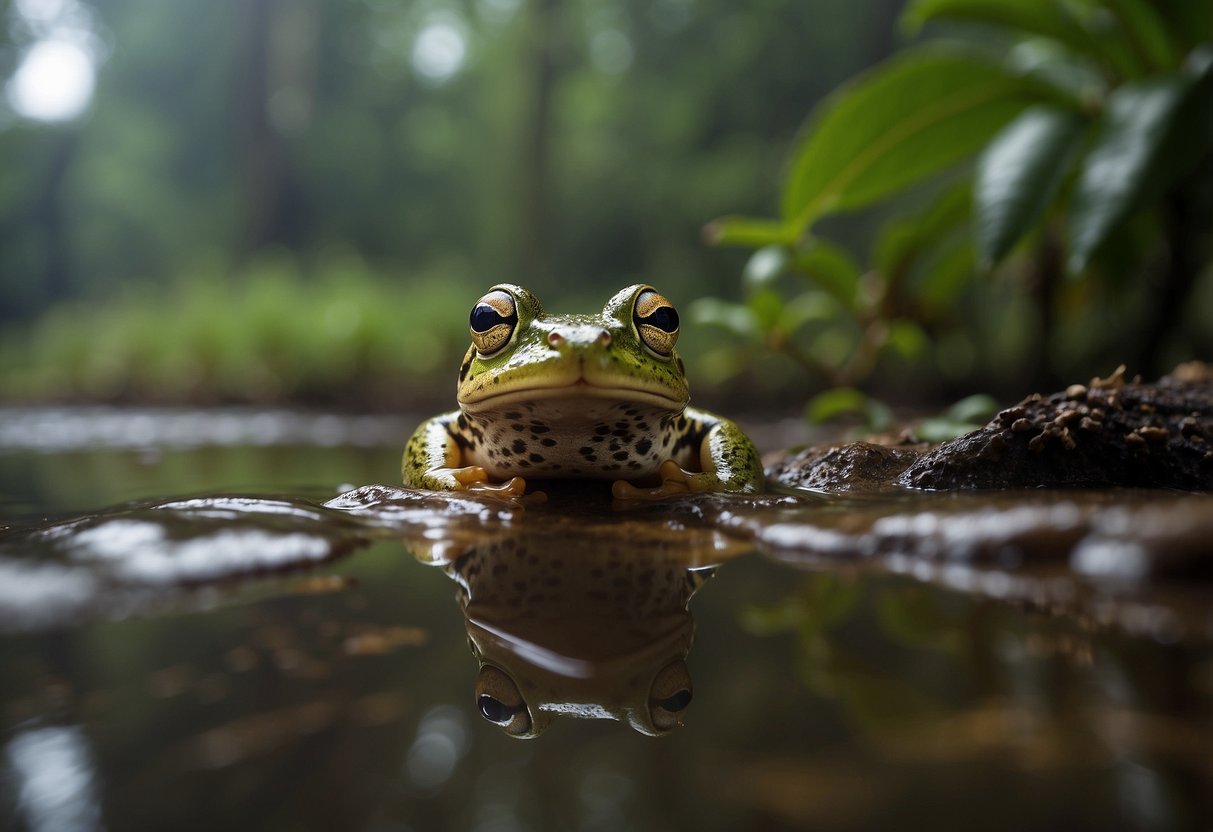
To protect frog populations, we need to focus on conserving their habitats and addressing climate change impacts. I will discuss methods to restore habitats and mitigate climate change effects.
Habitat Conservation and Restoration
Habitat conservation is critical for protecting frog populations. Many frogs depend on wetlands, ponds, and forests. These areas provide breeding and feeding grounds.
To protect these habitats, we must reduce pollution and prevent land development.
Restoration projects can also help. This includes replanting native vegetation and creating new wetlands.
Reconstructed habitats can support various frog species, ensuring they have places to live and breed.
Additionally, controlling invasive species prevents them from outcompeting native frogs.
Collaboration with local communities is essential.
Educating them about the importance of frogs and how to protect their habitats can lead to better outcomes. Community-led conservation efforts often have more lasting impacts.
Climate Change Mitigation Efforts
Climate change poses a major threat to frogs. Higher temperatures and changing rainfall patterns affect their lifecycles. To combat these effects, we need to implement broad climate change mitigation strategies.
Reducing greenhouse gas emissions is a top priority.
This can be achieved by transitioning to renewable energy sources like wind and solar power.
Limiting deforestation and promoting reforestation can also capture CO2 and help stabilize the climate.
Creating protected areas where human activities are restricted helps frogs by providing stable environments.
Additionally, some species may require assisted migration to safer habitats.
This involves relocating frogs to areas with more suitable climates to ensure their survival.
Monitoring and Research
Monitoring frog populations and understanding how they are affected by climate change require advanced techniques and accurate climate models. These efforts help us gather important data about the future of these species.
Advancements in Population Monitoring Techniques
I have observed that monitoring frog populations has become more sophisticated with the use of new technologies.
Tools like automated acoustic monitoring systems can record frog calls over long periods. This allows us to track population changes without being physically present.
Another key advancement is the use of environmental DNA (eDNA).
By collecting water samples and analyzing the DNA of species present, I can detect even low-density populations.
This method is less invasive and provides a more comprehensive overview of species diversity.
Additionally, satellite imagery and drones help track habitat changes.
With these tools, we can observe deforestation and other land changes from a bird’s-eye view.
This real-time data is crucial for understanding how habitat loss affects frog populations.
Climate Modeling and Predictive Ecology
Predictive ecology uses climate models to forecast how frog populations might respond to future climate changes.
These models take into account factors like temperature, precipitation, and habitat loss.
By using these models, I can predict which species are most at risk.
For example, models can show how rising temperatures might accelerate the aging process in frogs and toads.
This information helps us develop conservation strategies tailored to specific species’ needs, like creating protected areas or captive breeding programs.
Furthermore, simulations of different climate scenarios can guide our response plans.
By knowing potential outcomes, I can better prepare for and mitigate the effects of climate change on frog populations.
This proactive approach is essential for long-term conservation efforts.
International Collaboration and Policy
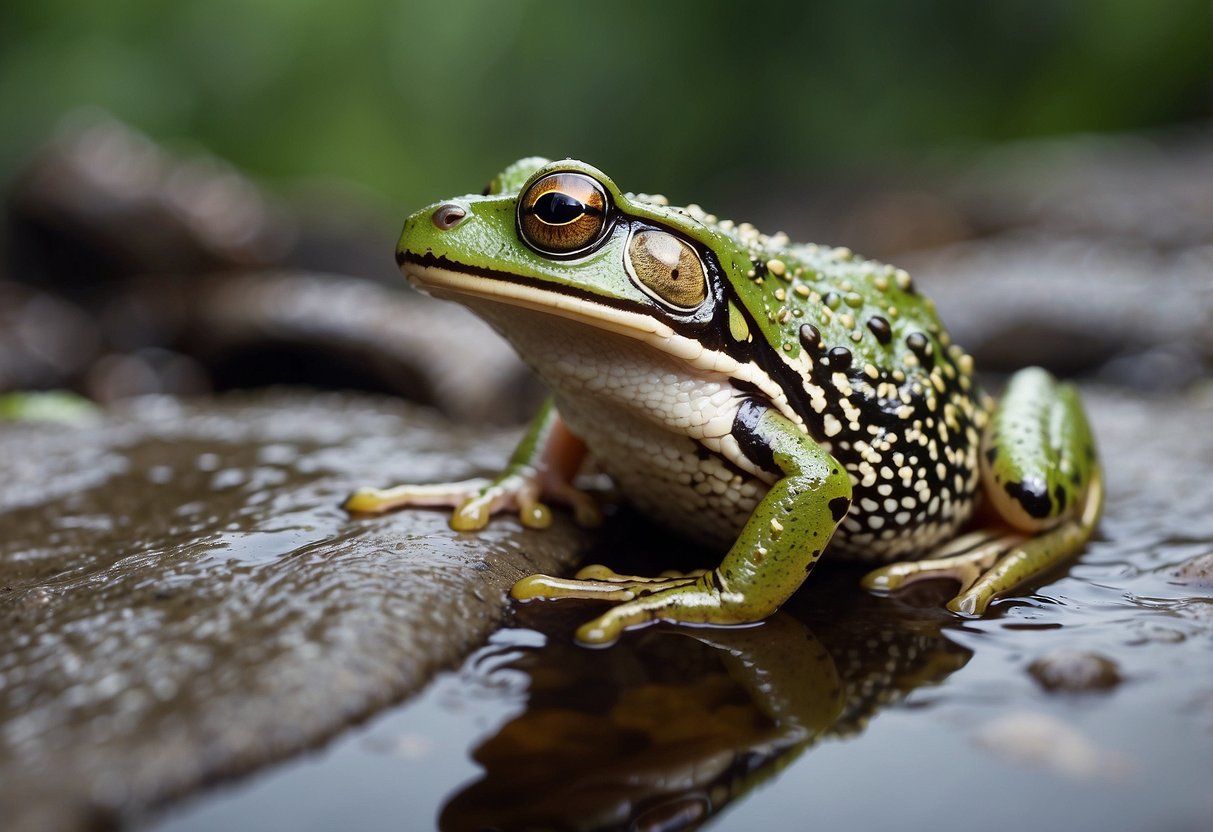
Efforts to combat the decline in frog populations need international collaboration.
Many organizations and countries are working together to address this issue. Global partnerships can help share research findings and resources.
Climate change has been a major factor in the decline of amphibian populations.
To tackle this, there have been various initiatives, agreements, and collaborations aimed at reducing greenhouse gas emissions.
International Agreements:
- Paris Agreement: Nations committed to curbing global warming.
- Convention on Biological Diversity: Aims to conserve biological diversity.
Collaboration Examples:
- Researchers from different countries sharing data on amphibian species.
- Joint efforts between governments to protect critical frog habitats.
Policy Efforts:
Governments around the world are also enacting policies to protect amphibians.
These include setting up protected areas and regulations to reduce habitat destruction.
Table: Key International Policies
PolicyAimParis AgreementReduce global greenhouse gas emissionsConvention on Biological DiversityConserve biological diversityRamsar ConventionProtect wetlands
It is clear to me that working together internationally is essential.
By combining our efforts, we can better address the challenges and make a significant impact.
Case Studies
Climate change is having a noticeable impact on frog populations worldwide. Two notable cases involve the Mountain Yellow-legged Frog in California and the Panamanian Golden Frog’s battle with the chytrid fungus.
Mountain Yellow-legged Frog in California
The Mountain Yellow-legged Frog has experienced dramatic population declines. Once abundant in the Sierra Nevada mountains, it now struggles to survive.
Warmer temperatures and reduced snowpacks have altered its breeding habitat.
This frog depends on high-altitude lakes and streams, which are shrinking due to climate change.
Additionally, the introduction of non-native fish has added predation pressures.
Efforts to save the Mountain Yellow-legged Frog include captive breeding programs and removing invasive fish.
Researchers monitor these frogs closely to better understand the impacts of changing environmental conditions.
Panamanian Golden Frog and Chytrid Fungus
The Panamanian Golden Frog faces grave challenges due to the chytrid fungus.
This disease thrives in warmer and more humid climates caused by climate change. It disrupts the frog’s skin, which is vital for respiration and hydration.
As a result, many Golden Frog populations have dwindled or disappeared.
Conservationists have taken drastic steps, such as establishing captive breeding colonies isolated from the fungus.
These efforts focus on preserving genetic diversity and potentially reintroducing fungus-resistant individuals into the wild.
The Panamanian Golden Frog serves as a stark reminder of how interconnected climate change and disease can devastate species.
Future Prospects for Frog Populations
Looking ahead, frog populations face uncertain future prospects.
Climate change continues to influence many aspects of their lives.
Warmer temperatures accelerate aging in frogs and toads, affecting their lifespans and reproduction rates. This trend has been observed, as mentioned in the study.
Potential Risks:
- Habitat Loss:
-
- Deforestation and land-use changes destroy critical habitats.
- The Central Amazon is nearing a threshold of deforestation, impacting various frog species (study).
- Extreme Weather Events:
-
- Increased frequency and intensity of storms could destroy habitats.
- Droughts may reduce water bodies essential for breeding.
- Disease Spread:
-
- Warmer climates can enhance the spread of diseases like chytridiomycosis, which has already caused declines in amphibian populations.
Possible Adaptations:
- Some frogs may adapt to changing environments through rapid evolution.
- Studies show that traits like body weight at metamorphosis and larval period might help frogs adjust (research).
Conservation Efforts:
- Protected Areas: Ensuring that key habitats are preserved and protected.
- Research and Monitoring: Ongoing studies to monitor health and numbers of frog populations.
- Disease Management: Efforts to control and prevent the spread of harmful diseases.
Frequently Asked Questions
Climate change poses multiple threats to frog populations. These include altered habitats, increased disease rates, and accelerated aging.
What is the primary factor in the decline of frog populations?
The main factor causing the decline of frog populations is climate change.
Warmer temperatures alter their habitats and disrupt their life cycles. This can affect their breeding patterns and hibernation periods.
How are changes in global climate patterns impacting amphibian habitats?
Changes in climate patterns result in altered water levels in streams and ponds.
This impacts the breeding and living conditions of amphibians. Higher temperatures can cause bodies of water to dry up, leading to habitat loss.
Why are frog species at high risk of extinction?
Frog species are at high risk because they are sensitive to environmental changes.
Their reliance on specific temperature and moisture conditions makes them vulnerable to shifts in climate. Additionally, their permeable skin makes them particularly susceptible to diseases and pollutants.
What direct and indirect effects does climate change have on amphibian populations?
Direct effects of climate change on amphibians include increased temperatures leading to faster aging and shorter lifespans. Indirect effects include altered ecosystems that disrupt food availability and breeding sites.
How does pollution in ecosystems contribute to the struggles of frog species?
Pollution can contaminate waterways, affecting frog health and reproductive success.
Chemicals can cause deformities and lower immune response, making frogs more susceptible to disease. Toxins can also accumulate in their bodies, leading to long-term health issues.
What actions can individuals take to mitigate the impact of global warming on amphibian survival?
To help amphibians, individuals can reduce their carbon footprint by using less energy and driving less.
Supporting conservation efforts and protecting wetlands is also crucial.
Additionally, reducing the use of pesticides and chemicals can help maintain clean habitats for frogs.