How do frogs in your backyard pond survive in winter weather? A cozy guide to amphibian hibernation
Frogs in backyard ponds face unique challenges when winter arrives. These small amphibians must adapt to survive freezing temperatures and icy conditions.
Many people wonder what happens to these creatures during the cold months.
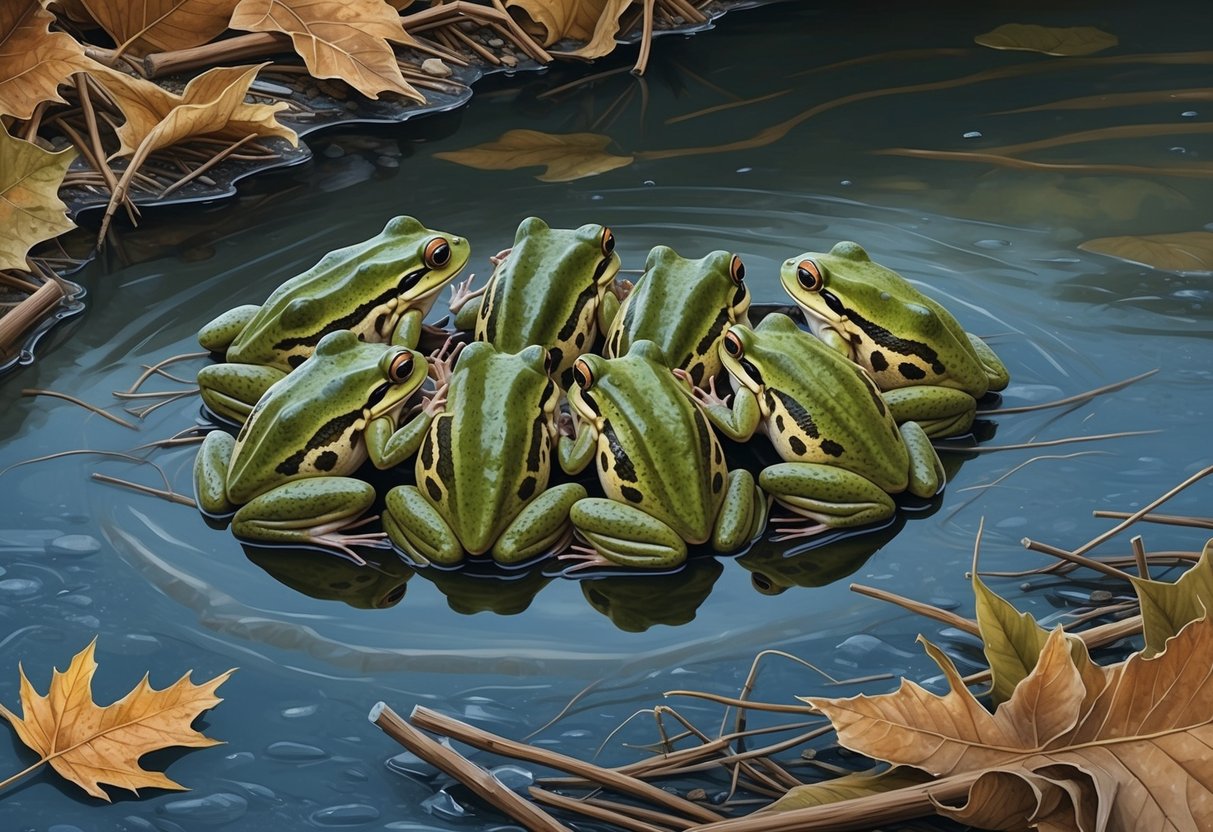
Frogs survive winter by entering a state of hibernation, slowing their metabolism and heart rate to conserve energy. Some species burrow into mud at the bottom of ponds, while others find shelter in nearby logs or underground. Their bodies produce a natural antifreeze that prevents ice crystals from forming in vital organs.
Pond owners can help frogs by keeping part of the pond unfrozen. This allows frogs to access oxygen and move if needed.
A pond depth of 18 to 24 inches helps protect frogs from freezing solid. With the right conditions, these amazing creatures can endure even the harshest winters.
Key Takeaways
- Frogs hibernate to survive cold temperatures in winter.
- Ponds need unfrozen areas and sufficient depth for frog survival.
- Natural antifreeze in frogs’ bodies protects their organs from freezing.
Understanding Frogs’ Winter Behavior
Frogs have amazing ways to survive cold winters. They use special body changes and find safe places to rest until spring comes.
Frogs’ Biology and Hibernation
Frogs are cold-blooded animals. This means their body temperature changes with the air around them. When it gets cold, frogs slow down a lot.
Some frogs hibernate underwater. They rest at the bottom of ponds where the water doesn’t freeze. These frogs breathe through their skin during this time.
Other frogs hibernate on land. They hide under leaves or in deep holes. Their bodies make a special sugar that acts like antifreeze. This keeps their organs safe.
Frogs can even freeze partly and still live! Their hearts stop beating and they don’t breathe. But when spring comes, they thaw out and hop away.
Physical Adaptations for Cold Climates
Frogs have cool tricks to deal with winter. Some frogs can make glucose in their blood. This sugar keeps ice from forming in their organs.
Their skin changes too. It gets thicker to protect them from the cold. Some frogs also make a slime coat that helps keep water in their bodies.
Frogs’ lungs and hearts can work with very little oxygen. This helps them survive when they’re buried in mud or frozen.
Many frogs turn darker in color during winter. This helps them soak up more sun on warmer days. It’s like wearing a dark coat to stay warm!
The Hibernation Process
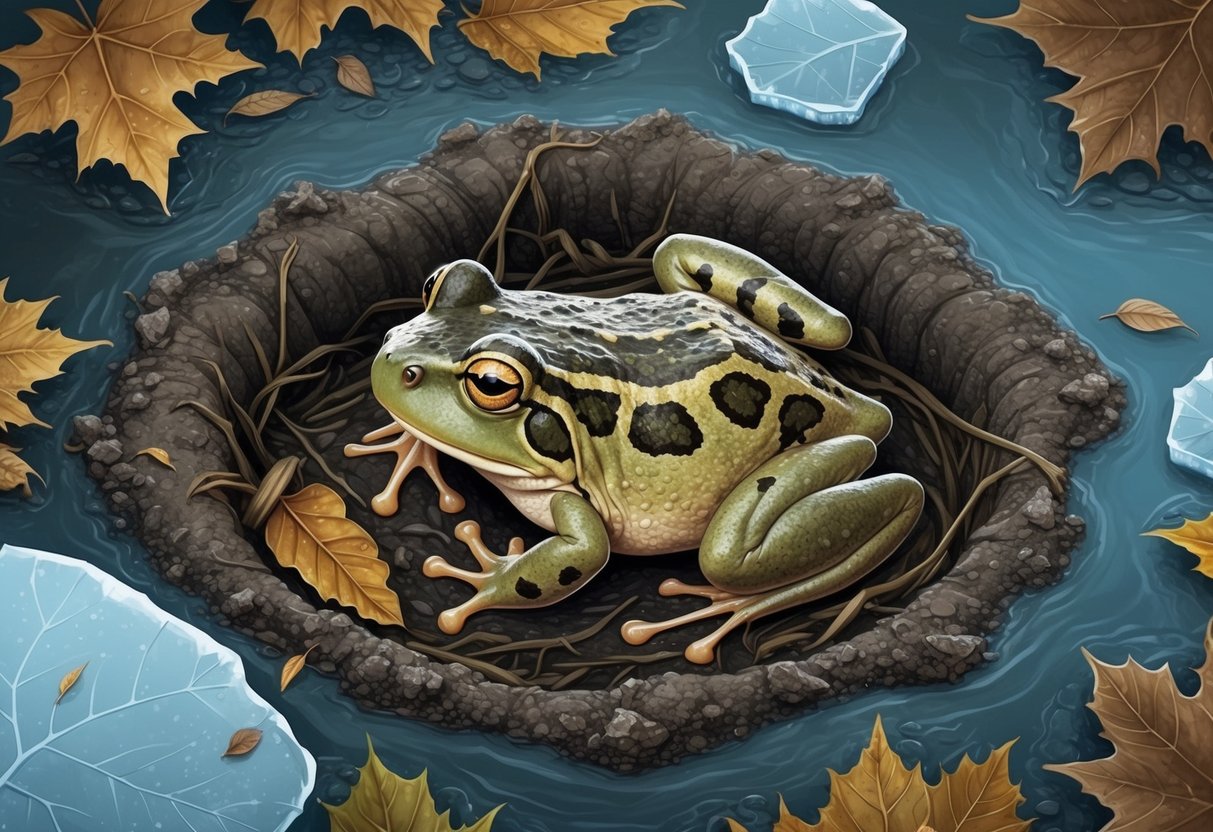
Frogs have amazing ways to survive harsh winters. They use special places to hide and make changes in their bodies. This helps them stay alive until spring comes.
Types of Hibernacula
Frogs pick different spots to spend winter. Some hide at the bottom of ponds. They stay there all winter long. The water doesn’t freeze all the way down, so it’s safe.
Other frogs dig into the mud. They burrow deep enough to avoid freezing. Some even hide in cracks in rocks or logs.
Land frogs might find holes in the ground. They go below the frost line where it’s warmer. This keeps them from freezing solid.
Entering Hibernation
As it gets cold, frogs start to change. They eat less and move slower. Their bodies make special chemicals that work like antifreeze.
Glucose levels in their organs go up. This stops ice from forming inside important parts of their bodies.
Their breathing and heart rate slow down a lot. They almost look dead, but they’re just in a very deep sleep.
During Hibernation
While sleeping, frogs barely use any energy. They can’t eat, so they live off fat stored in their bodies.
Some frogs can even partly freeze! Ice forms in safe places in their bodies. But the special antifreeze keeps their organs from freezing.
Aquatic frogs float or sit at the bottom of ponds. They absorb oxygen through their skin from the water.
Emerging From Hibernation
When spring comes, frogs slowly wake up. They start to move and breathe faster. Their bodies warm up bit by bit.
Frogs come out when it’s safe. If they wake up too early, they might freeze. This is called “winter kill” and can be very bad for frogs.
Once awake, frogs start eating again. They also look for mates. Spring is a busy time as they make up for the quiet winter months.
Pond Environment in Winter
Winter brings big changes to backyard ponds. The water gets cold and may freeze over. This affects oxygen levels and water quality for frogs and other pond life.
Water Temperature and Ice Formation
As winter sets in, pond water gets very cold. The top layer can freeze into ice. This ice acts like a lid on the pond. It stops air from getting in and out.
Aquatic frogs need deep water to survive winter. Ponds should be at least 18 to 24 inches deep. This depth keeps the water from freezing solid.
Some ice on top is okay. But frogs need a hole in the ice to breathe. People can use a bubbler or aerator to keep a spot open.
Oxygen Levels and Water Quality
Cold water holds more oxygen than warm water. This helps frogs breathe underwater in winter. But if ice covers the whole pond, oxygen can run low.
Frogs may swim slowly or float at the bottom of the pond. They need less oxygen when they’re not active. Still, some gas exchange through the water’s surface is important.
Falling leaves can make the water dirty. This can use up oxygen as they rot.
It’s good to remove leaves from the pond in fall. This keeps the water clean for frogs all winter.
Survival Strategies
Frogs have amazing ways to stay alive during cold winters. They use special body changes and smart behaviors to get through the freezing months.
Antifreeze Compounds in Frogs
Some frogs make their own antifreeze to survive winter. They produce glucose and other chemicals that work like antifreeze in their bodies. This keeps ice from forming in their organs.
These compounds allow frogs to freeze up to 65% of their body water without dying. Their hearts may stop beating and they might not breathe for weeks. But when spring comes, they thaw out and hop away!
Wood frogs are champions at this. They can survive being frozen solid for months. Their bodies pump glucose into vital organs to protect them from damage.
Behavioral Adaptations
Frogs also use clever behaviors to survive winter. Aquatic frogs often sink to the bottom of ponds. There, they rest in the mud where it’s warmer.
They slow down their body processes to use less energy. These frogs can absorb oxygen through their skin from the water. They don’t need to come up for air all winter.
Land frogs find cozy spots to sleep through winter. They might hide under leaves, in rotting logs, or deep in the soil. Some even snuggle up in small groups to stay warm.
Frogs’ Dietary Changes
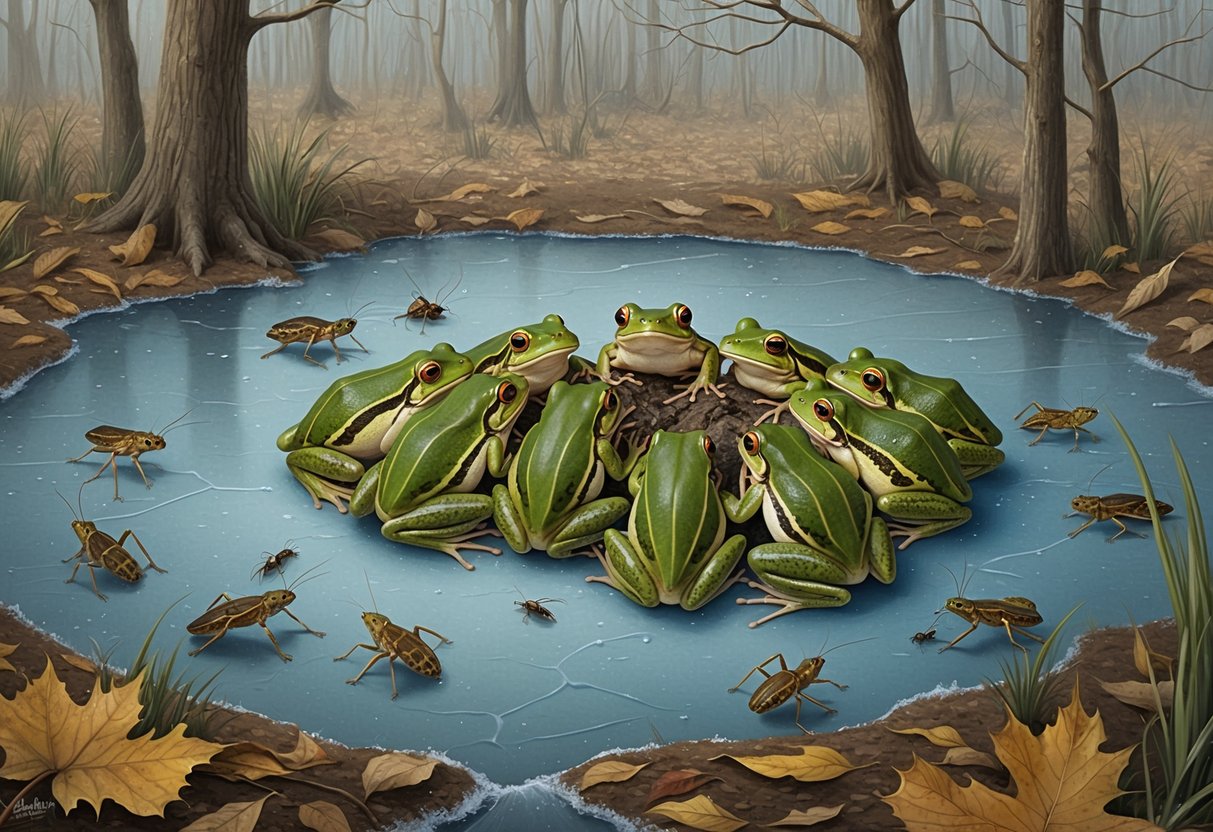
Frogs in backyard ponds change their eating habits as winter approaches. During warmer months, these amphibians are active hunters. They catch insects, worms, and other small creatures.
As temperatures drop, frogs slow down. Their metabolism decreases, and they eat less. Some frogs stop eating completely before winter sets in.
This change helps frogs prepare for hibernation. Their bodies use stored fat for energy during cold months. Frogs don’t need to catch food while they rest at the bottom of ponds.
Here’s how a frog’s diet changes with the seasons:
SeasonDietSpring/SummerActive hunting, varied dietFallReduced eating, building fat reservesWinterLittle to no eating, using stored energy
Frogs’ bodies are smart. They know when to stock up on food and when to conserve energy. This clever system helps them survive winter in backyard ponds.
When spring comes, frogs wake up hungry. They start eating again to regain strength. The cycle of feasting and fasting continues year after year.
Risks and Threats during Winter
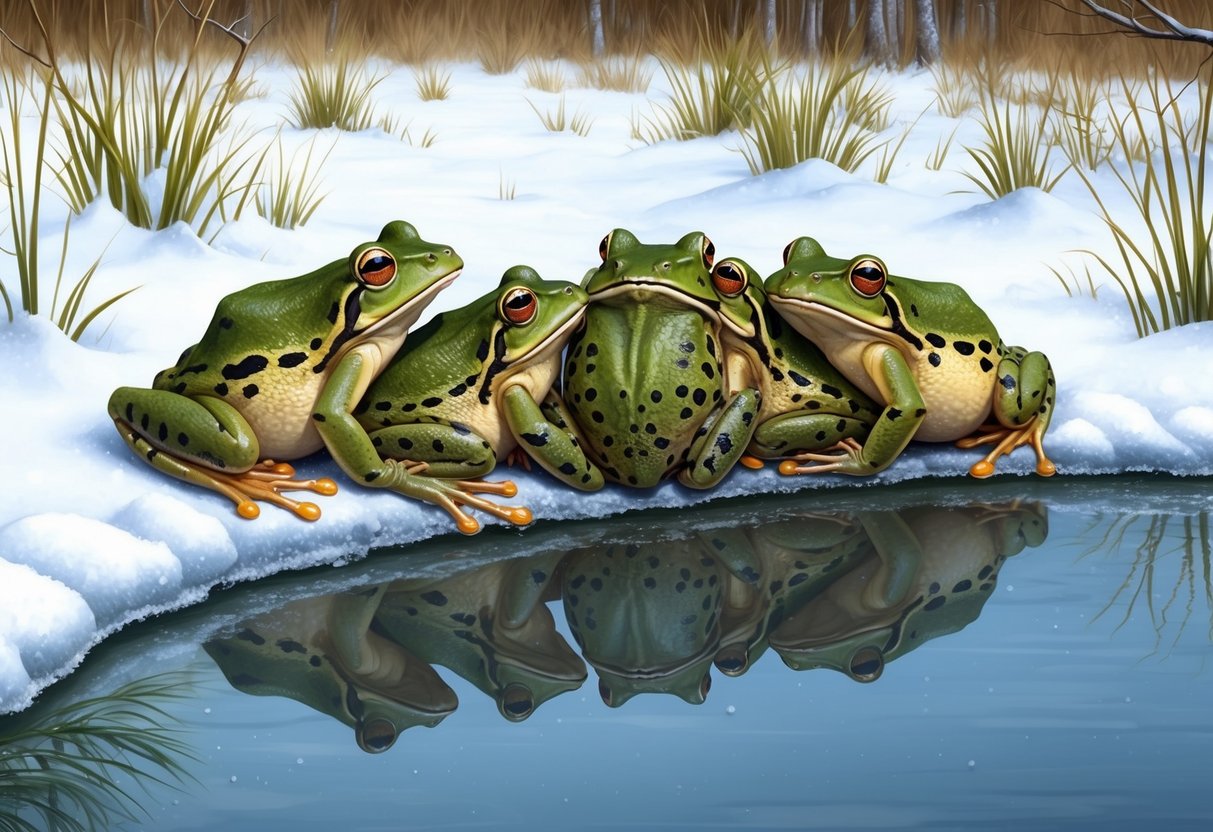
Frogs face several risks during winter hibernation in backyard ponds. Ice formation can trap frogs underwater if the pond freezes completely. This can cut off their oxygen supply, leading to suffocation.
Shallow ponds pose a danger as well. If the water isn’t deep enough, it may freeze solid. Aquatic frogs need at least 18 to 24 inches of water depth to survive winter safely.
Predators remain a threat even in cold months. Raccoons, birds, and other animals might break through thin ice to catch sleeping frogs.
Sudden temperature changes can trick frogs into coming out of hibernation too early. If they emerge and temperatures drop again, they may freeze to death.
Pollution and chemical runoff in ponds can harm hibernating frogs. These substances become more concentrated as water levels drop in winter.
Lack of oxygen is another concern. Without proper gas exchange, harmful gases can build up under the ice. This can be fatal for the frogs resting below.
Human activity near ponds can disturb hibernating frogs. Excessive noise or vibrations might wake them up when they should be conserving energy.
Conservation Efforts
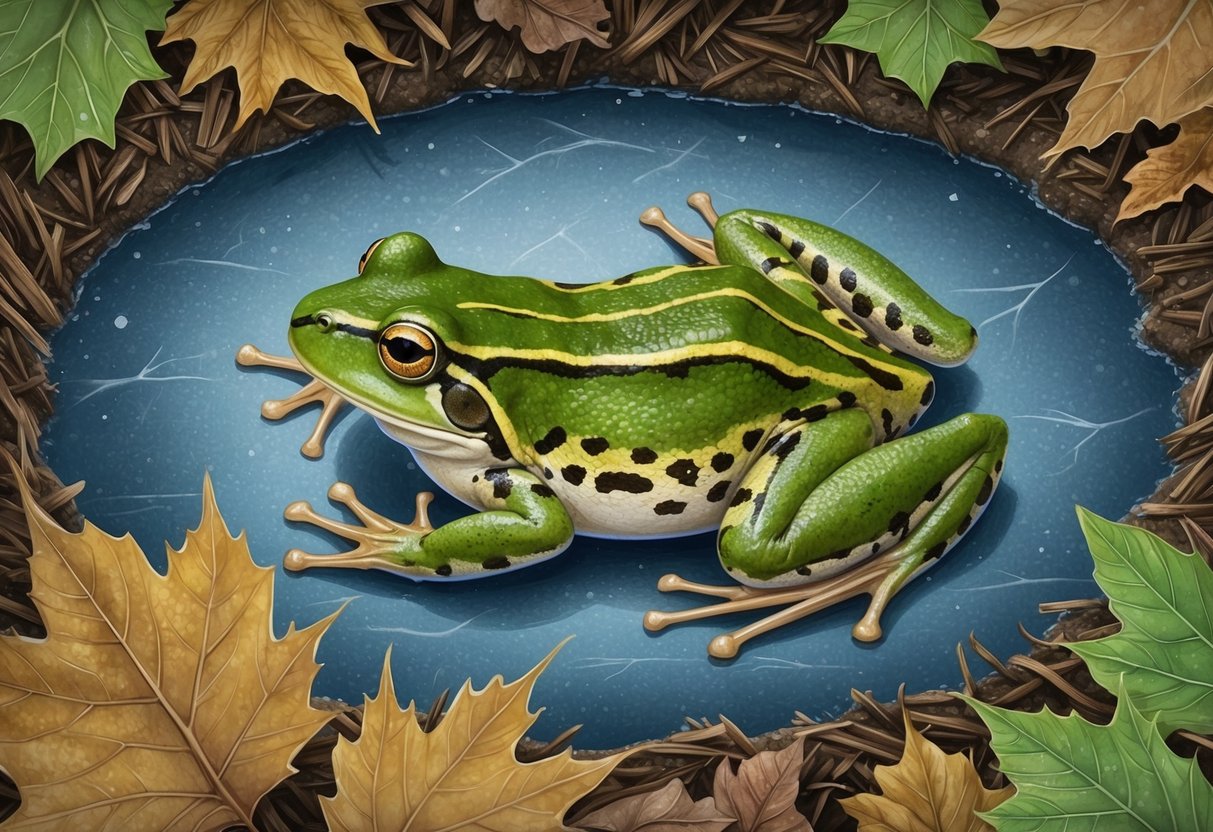
Protecting frog habitats and supporting wild populations are crucial for frog survival.
These efforts help frogs thrive in backyard ponds and natural areas during winter and beyond.
Protecting Backyard Frog Habitats
Create a frog-friendly pond that’s at least 18 to 24 inches deep. This depth keeps water from freezing solid in winter.
Add native plants around the pond. They provide shelter and attract insects for frogs to eat.
Avoid using chemicals near the pond. Pesticides and fertilizers can harm frogs.
In winter, maintain an open hole in ice for frogs to access oxygen. Use hot water to melt ice safely, not tools that could hurt frogs.
Leave fallen leaves and logs near the pond. These create cozy spots for frogs to hide and stay warm.
Supporting Wild Frog Populations
Join local wetland clean-up events. Clean habitats help frogs stay healthy.
Report frog sightings to wildlife organizations. This data helps track frog populations.
Support laws that protect wetlands. These areas are key for wild frog survival.
Reduce water use at home. This helps keep natural frog habitats from drying up.
Spread the word about frog conservation. Teach others how to help frogs in their area.
Add a small ground-level birdbath in your yard. It gives frogs a place to stay moist.
Research and Studies on Frogs in Winter
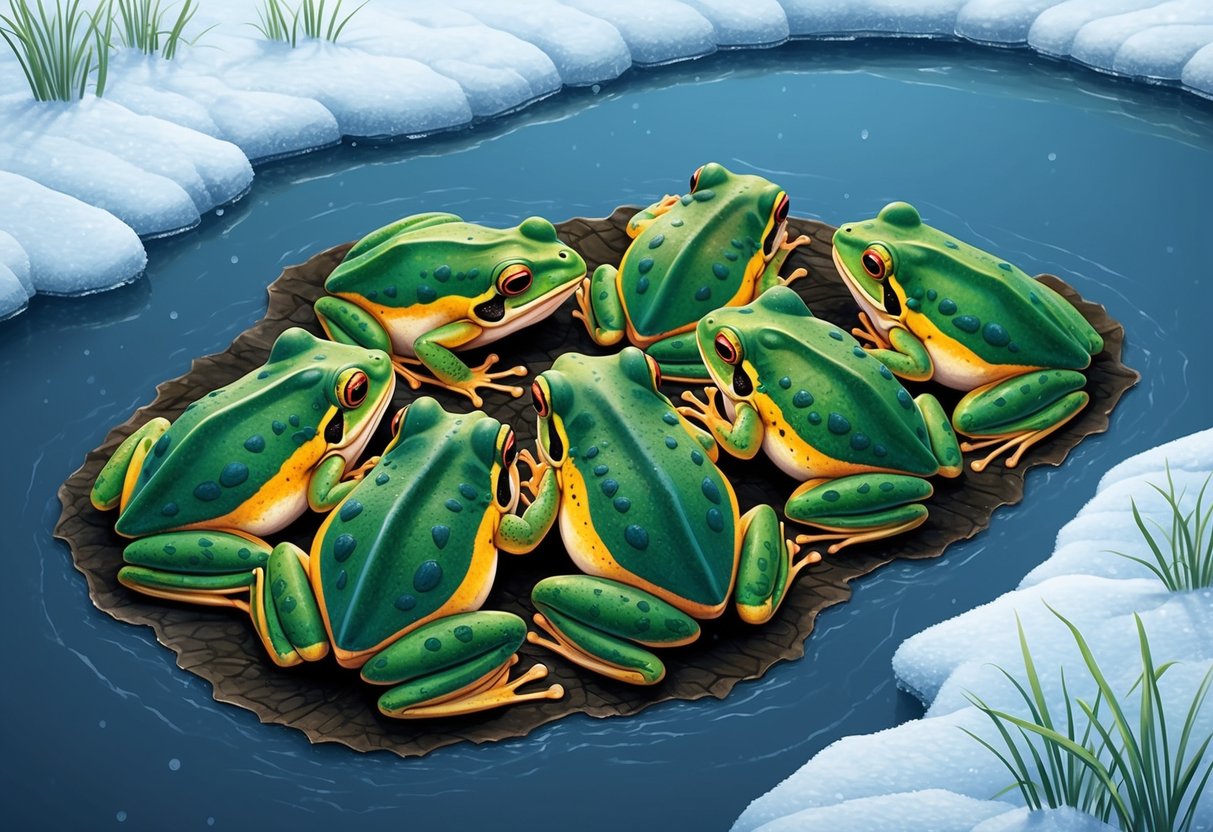
Scientists have done many studies on how frogs deal with cold weather. They want to know how these little animals can survive when it’s freezing.
One study looked at wood frogs in Alaska. These frogs can actually freeze solid and then thaw out in spring. The researchers tested different ways of freezing the frogs to see what worked best.
Another group studied why frogs don’t turn into ice cubes. They found that frogs make a special kind of sugar in their bodies. This sugar works like antifreeze in cars. It keeps the frog’s important organs from freezing, even when ice forms in other parts of its body.
Some scientists are very interested in how frogs do this trick. They think it might help doctors learn new ways to keep organs fresh for transplants.
Researchers have also looked at frogs that spend winter underwater. They found that these frogs pick spots where the water stays warm enough. The frogs rest at the bottom of ponds where it’s warmer than the icy surface.
All these studies help us understand how frogs can live through cold winters. It’s amazing how these small animals have found ways to beat the freezing weather!
Tips for Creating a Frog-Friendly Pond
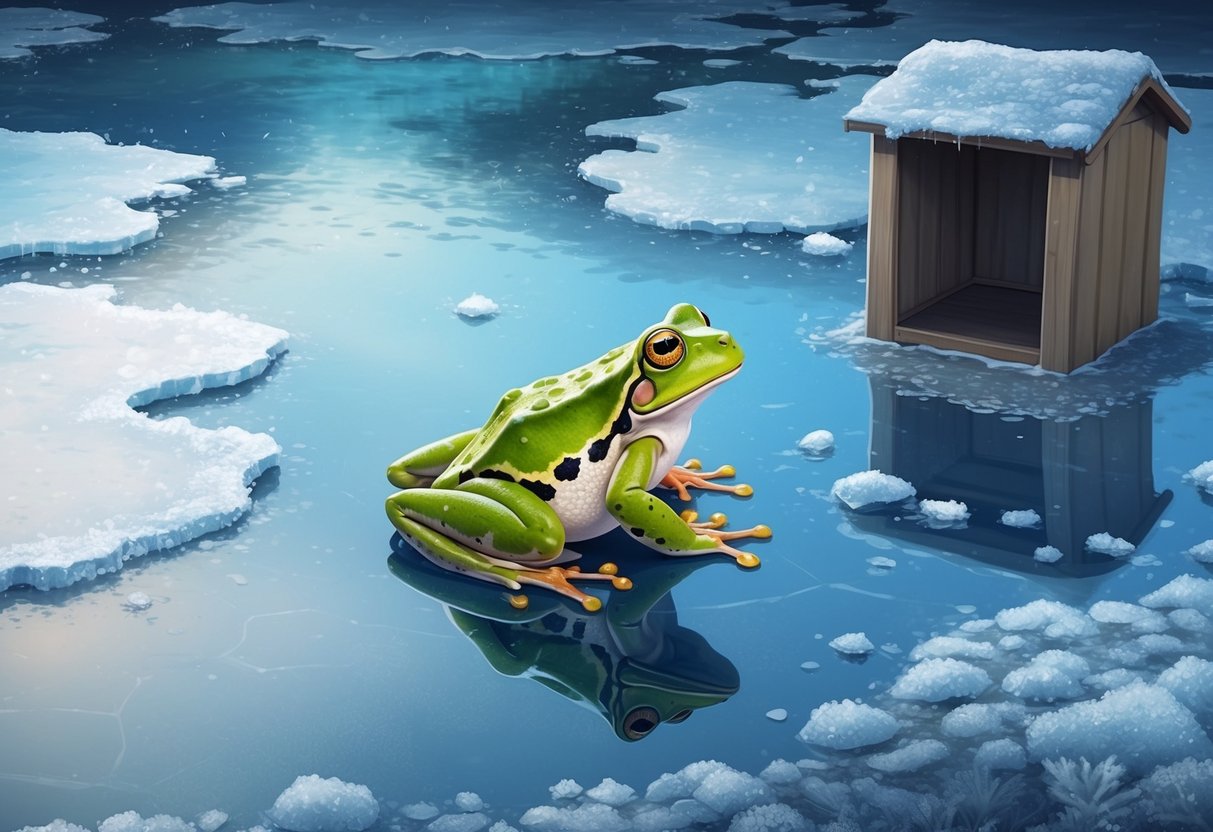
A frog-friendly pond can be a fun addition to any backyard. To create one, start by choosing the right spot. Pick a shaded area away from noisy places.
Next, dig out the soil to make a pond at least 1 foot deep. The edges should slope gently. This helps frogs get in and out easily.
Use a flexible pond liner to shape the pond. Make sure it’s big enough to cover the hole with extra on the sides.
Fill the pond with de-chlorinated water. If you use tap water, let it sit for 48 hours before adding frogs.
Plants are important for frog ponds. They give frogs places to hide and lay eggs. Some good choices are:
- Water lilies
- Cattails
- Floating plants like duckweed
Add some rocks and logs around the pond. Frogs like to bask on these.
Don’t put fish in your frog pond. They might eat frog eggs and tadpoles.
Keep the area around the pond natural. Avoid using pesticides or chemicals nearby.
With these tips, frogs will soon find their new home. They’ll bring life and fun sounds to your backyard!
Frequently Asked Questions
Frogs have amazing ways to survive winter in backyard ponds. They use special tricks to stay alive in the cold. Let’s explore some common questions about frogs and winter.
How long do frogs typically hibernate?
Frogs usually hibernate for 3 to 6 months. The exact time depends on the species and local climate. Some frogs may wake up briefly on warmer winter days.
Do frogs enter a state of hibernation or brumation during colder months?
Frogs go through brumation in winter. This is like hibernation, but for cold-blooded animals. Their body functions slow down, but they can still move a little if needed.
When can you expect frogs to emerge from hibernation?
Frogs typically come out of hibernation in spring. This happens when temperatures stay above 50°F (10°C) for a while. Different frog species may emerge at slightly different times.
What measures can be taken to protect frogs in a pond during the winter season?
To help frogs in winter, keep a hole in the ice for oxygen. Don’t break ice with sharp tools. Leave some plants and leaves in the pond for hiding spots.
Is it possible for frogs to endure freezing conditions in a pond?
Yes, some frogs can survive freezing. They have special chemicals in their bodies that act like antifreeze. This helps protect their organs from ice damage.