
Imagine a frog that looks like it was painted with milk and chocolate milkshakes – that’s the Amazon Milk Frog for you! Known scientifically as Trachycephalus resinifictrix, these amphibians are strikingly beautiful and belong to the tree frog family. They have these cool creamy white and brown patches that make them stand out like a piece of art in the wild.
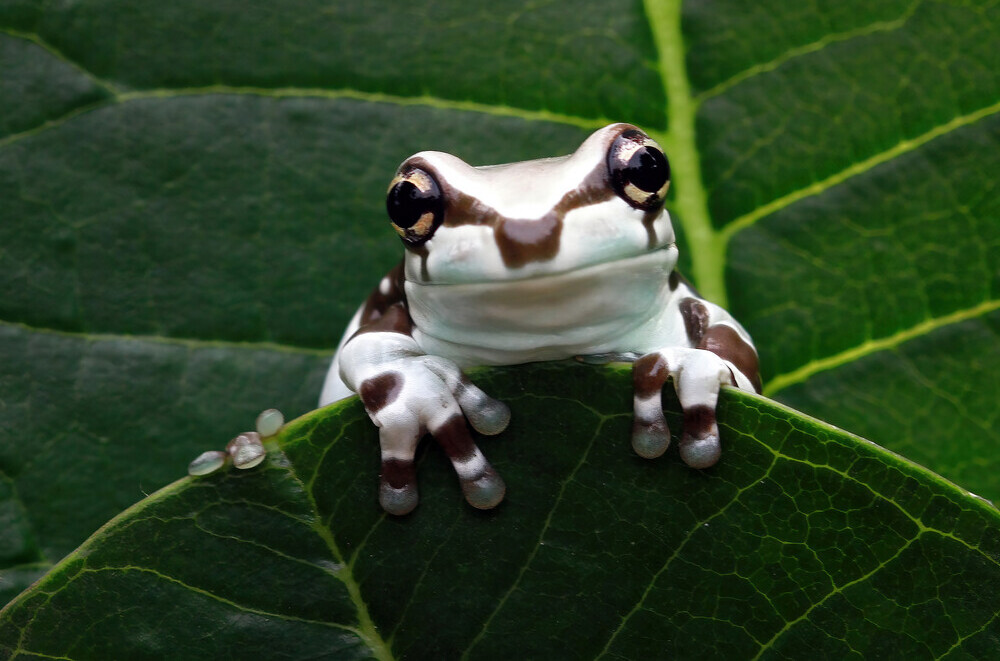
This funky frog species hangs out in the tropical rainforests of South America, especially in the Amazon Basin. They’re arboreal, which is a fancy way of saying they spend most of their lives in trees. So don’t be surprised if you spot one lounging on a high branch.
The Amazon Milk Frog does more than just look good. They play a crucial role in their ecosystem by helping to control insect populations. Every time they snag a bug for a snack, they’re keeping the environment balanced. Pretty neat, right?
These little guys prefer humid and warm environments, which makes the lush Amazon rainforest their perfect home. They’re also mostly found near water bodies like rivers and streams, which makes sense since they need a moist environment to thrive.
So, why are they called Milk Frogs? When they feel threatened, they secrete a sticky, milky substance from their skin. It’s like their own built-in spa treatment, but for protection. This unique secretion helps deter predators and keeps them safe in the wild.
The Amazon Milk Frog is not just an eye candy. Their presence signifies a healthy and thriving ecosystem. By understanding and appreciating these creatures, we can also highlight the importance of conserving their natural habitats.
Physical Characteristics and Unique Features
The Amazon Milk Frog definitely knows how to dress to impress. These frogs sport a fantastic mix of creamy white or pale blue-grey skin with bold brown or black patches, which gives them a unique, marbled appearance. It’s like they’ve stepped out of a natural art gallery.
Adult Amazon Milk Frogs can grow quite big for tree frogs, reaching up to 4 inches in length. They have a sturdy build and those big, absorbent toe pads that help them stick to tree trunks and branches with ease. These toe pads are like little natural suction cups, giving them superb climbing abilities.
A cool thing about these frogs is their skin texture. Unlike the smooth skin of many other frogs, the Amazon Milk Frog has a slightly bumpy, almost leathery texture. This not only helps with camouflage but also makes their skin tougher and more resistant to the wear and tear of their arboreal lifestyle.
In the amphibian world, their lifespan is considered quite long—they can live up to 8-10 years with good care, especially in captivity. This makes them not just a fleeting encounter in the Amazon but a long-term resident.
When you compare them to other frogs, like the common green tree frog, the Amazon Milk Frog stands out due to their unique pattern and size. Their striking appearance and size make them easily recognizable even among a diverse group of amphibians.
Each frog is uniquely patterned, almost like a fingerprint, so no two frogs look exactly the same. This individuality adds to their charm and makes spotting them in the wild an exciting experience for any nature enthusiast.
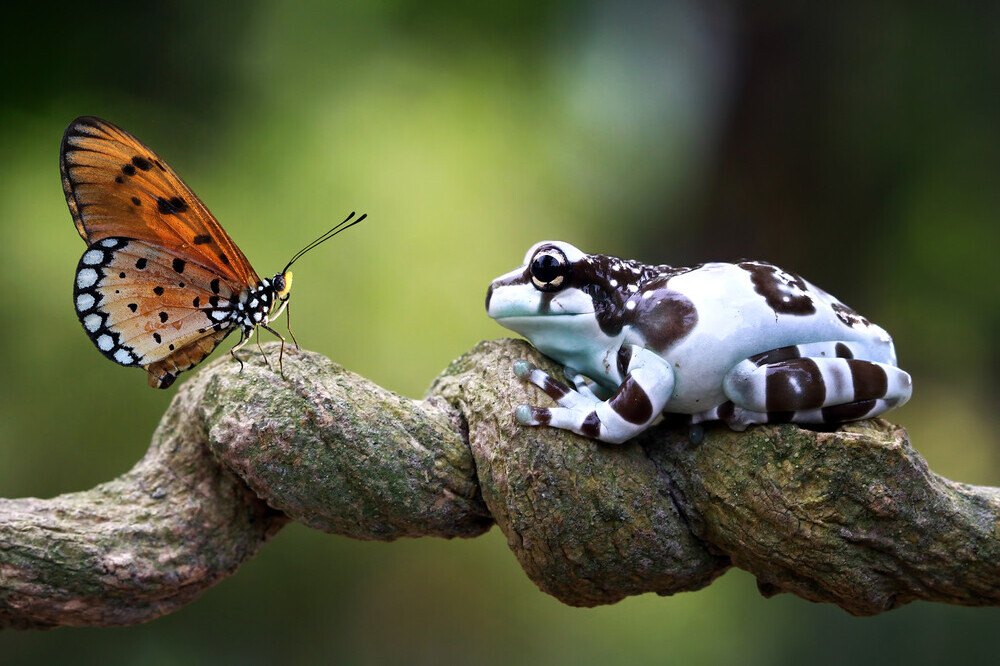
Behavior and Lifestyle
Amazon Milk Frogs are night owls. They come to life when the sun goes down, so if you’re ever in the Amazon after dark, keep your eyes peeled for these nocturnal creatures hopping about.
These frogs are not loners. They communicate through a series of croaks and calls that can be heard echoing through the forest at night. This vocalization is not just for socializing; it plays a key role in their mating rituals and territorial claims.
When it comes to food, Amazon Milk Frogs have a broad diet. They primarily feast on insects, such as crickets, moths, and beetles. If they’re lucky, they might even score a small invertebrate. Their hunting strategy is all about patience and that swift, sticky tongue strike.
You’ll often find them hanging out on tree branches or leaves, showcasing their excellent climbing skills. Those toe pads aren’t just for show—they give these frogs the grip they need to navigate their arboreal playground safely.
In the animal world, staying cool is essential. Amazon Milk Frogs regulate their body temperature by choosing the perfect spots to settle down, often seeking shade during warmer nights and venturing to more open areas when it’s cooler.
They have a knack for being cautious during the day, hiding from predators. Their coloration helps them blend into the dappled light of their forest environment, making it harder for would-be hunters to spot them.
This blend of social and survival skills makes the Amazon Milk Frog a fascinating subject for anyone interested in understanding how creatures adapt to their environments. Their behavior offers insights into the delicate balance of the Amazon ecosystem, showing just how interconnected and complex nature can be.
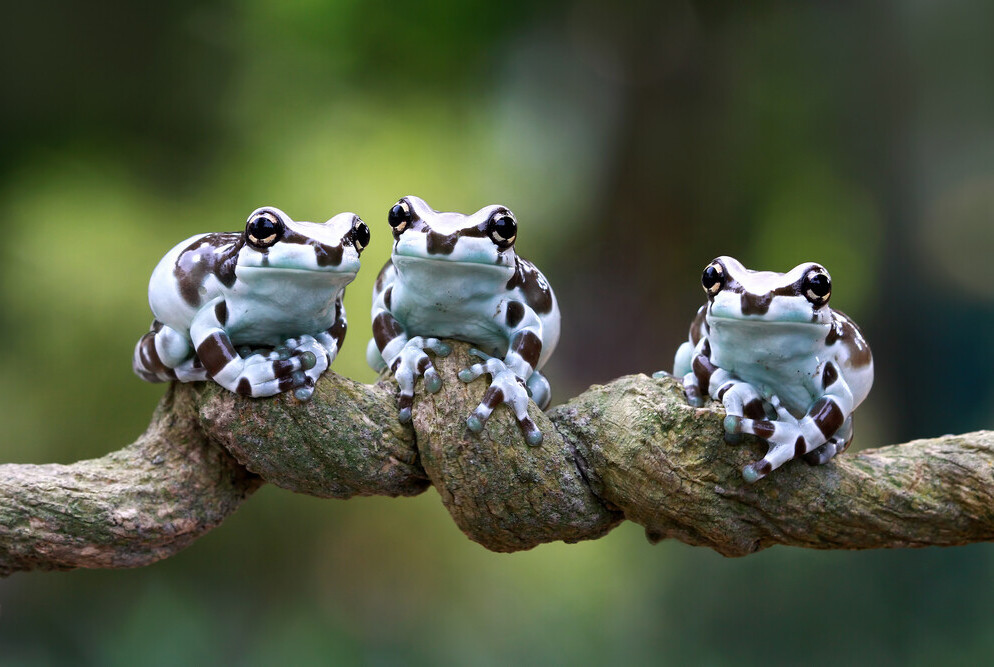
Reproduction and Life Cycle
Amazon Milk Frogs have a fascinating breeding process. When the rainy season starts, it’s time for these frogs to get busy. They choose water-filled tree holes or small temporary ponds to lay their eggs, ensuring their offspring have a moist environment to start life.
Males call out with their unique croaks to attract females. It’s a bit like nature’s own version of a serenade. Once a male successfully woos a female, she lays a cluster of eggs, and he fertilizes them externally. This whole egg-laying affair can be quite a sight, with females depositing hundreds of eggs at a time.
After laying, the eggs hatch within a few days if conditions are right. Tiny tadpoles emerge and begin their aquatic life. At this stage, they’re pretty vulnerable, relying on the safety of their water-filled nursery.
As the tadpoles grow, they go through a series of transformations. They develop from these tiny, wriggly creatures into fully-formed frogs over a few weeks. Watching this metamorphosis is like witnessing magic – legs sprout, tails shrink, and they prepare to make the big leap to land.
Juvenile Amazon Milk Frogs are mini versions of the adults but without the striking coloration. They’re more muted in color, which helps them stay under the radar of predators as they continue to grow and explore their world.
Reaching adulthood, these frogs continue the cycle, becoming part of the balance of life in the rainforest. Understanding their life cycle helps us appreciate the delicate dance of growth and survival in nature.
Conservation Status and Threats
Amazon Milk Frogs are currently listed as a species of least concern, which is good news. However, this doesn’t mean they’re out of the woods. Their habitat in the Amazon is under constant threat, mainly due to deforestation and environmental changes.
Logging and agricultural expansion lead to habitat loss, which is a major issue. When trees are cut down, these frogs lose their homes, making it harder for them to find suitable places for living and breeding.
Pollution also poses a significant threat. Chemical runoff from agriculture and other pollutants can contaminate their breeding grounds, affecting egg and tadpole survival rates. Even small changes in their environment can have large impacts on their populations.
Climate change is another looming threat. Changes in temperature and precipitation patterns can disrupt their breeding cycles and habitat conditions. For a species so finely tuned to its environment, even slight changes can be disastrous.
Conservation efforts are essential to protect these frogs and their rainforest homes. Organizations working on rainforest conservation play a crucial role in preserving the natural habitats of the Amazon Milk Frog.
Supporting sustainable practices and promoting awareness about rainforest preservation can make a real difference. By understanding and addressing these threats, we can help ensure that the Amazon Milk Frog and its vibrant habitat survive for future generations to enjoy.
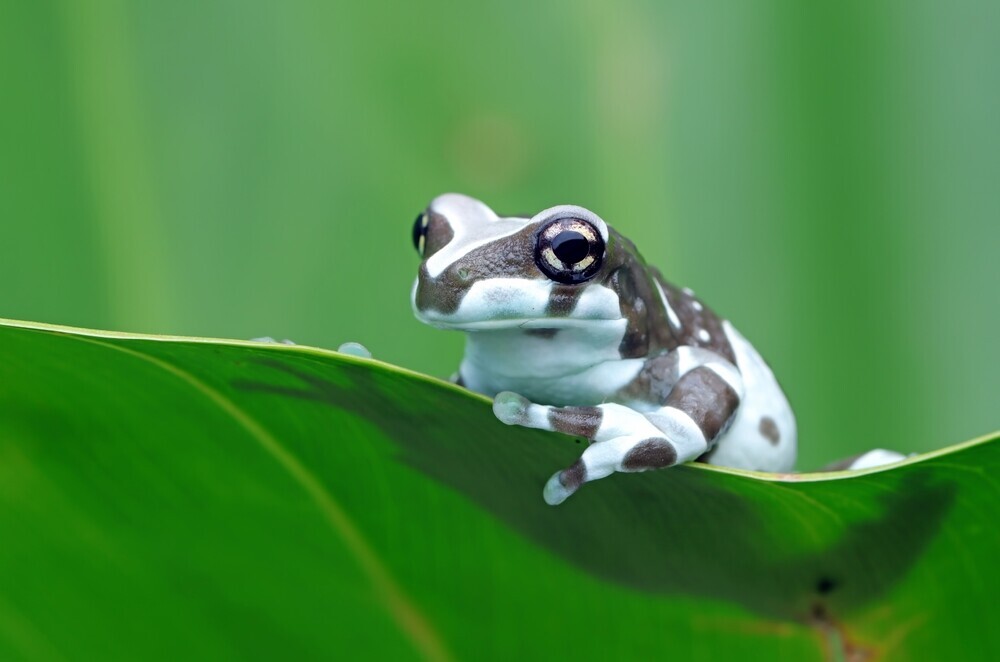
The Amazon Milk Frog in Captivity
Amazon Milk Frogs are gaining popularity as pets due to their striking appearance and relatively easy care. They’re a great choice for reptile enthusiasts looking to add a bit of tropical flair to their collection.
Caring for these frogs involves replicating their natural habitat as closely as possible. A tall terrarium with plenty of climbing space, humidity levels around 70-80%, and temperatures between 75-80°F during the day are key for keeping them happy and healthy. Access to fresh water and a diet of appropriately-sized insects like crickets and roaches is also essential.
Creating a bioactive setup with live plants and a clean-up crew (like springtails and isopods) can help maintain a more natural environment within the enclosure. Not only does this look beautiful, but it also helps manage waste and keeps the habitat healthier.
Handling should be minimal, as frogs have sensitive skin that can absorb oils and chemicals from human hands. It’s best to observe them and enjoy their behaviors from a distance, keeping them stress-free and in good health.
Ethical considerations are important when keeping any pet. Purchasing captive-bred frogs from reputable breeders helps reduce the impact on wild populations and ensures you’re getting a healthy animal. Always research and prepare thoroughly before bringing an Amazon Milk Frog into your home to ensure you can meet all their care requirements.
These fascinating creatures not only offer a unique window into the Amazonian rainforest but also teach us about the importance of conservation and responsible pet ownership. Respecting their needs and natural behaviors in captivity can enrich your life and theirs.