Fairy Tales Featuring Frogs And Toads: Amphibian Heroes in Classic Stories
Frogs and toads hop into many fairy tales, bringing magic and wonder to stories loved by children and adults alike. These small creatures often play big roles, from enchanted princes to helpful guides. Their presence in tales spans cultures and centuries, showing how important they are in storytelling.
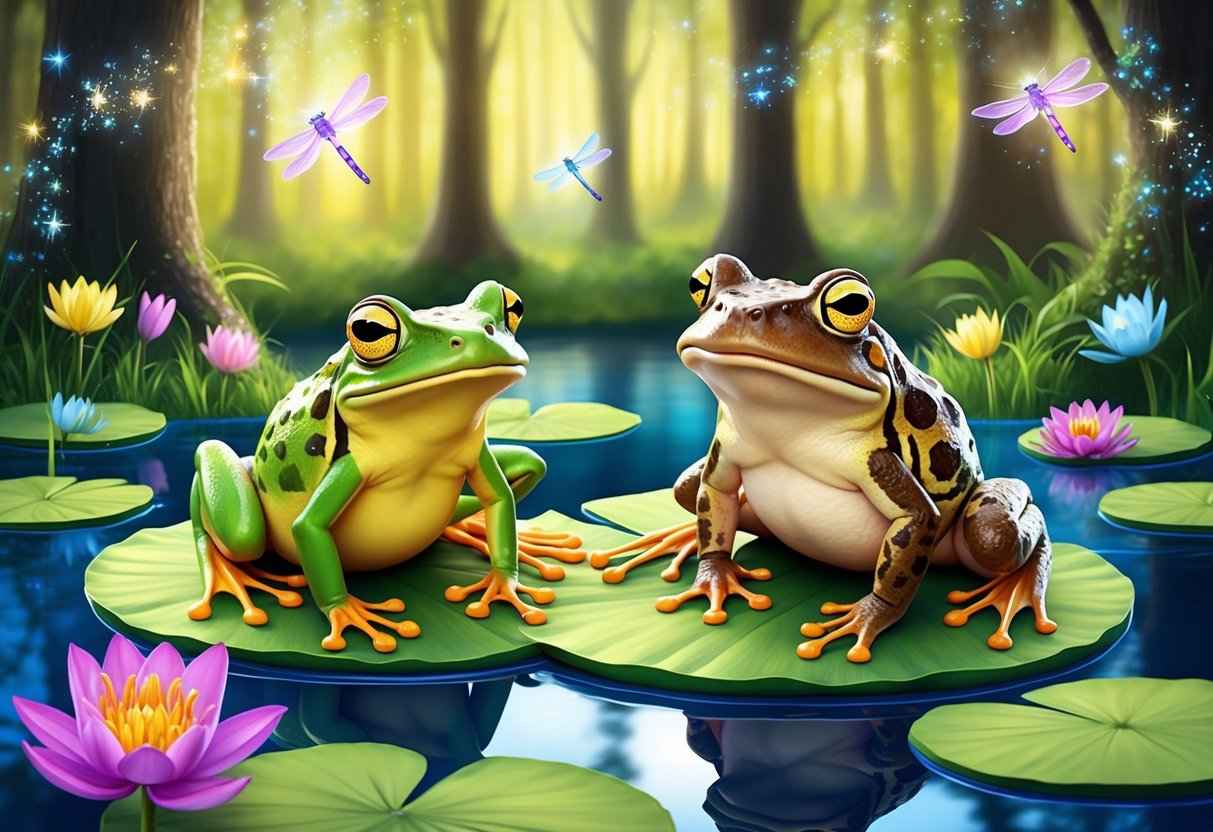
Frogs and toads in fairy tales often represent change and growth. They start life in water and end up on land, making them perfect symbols for big life shifts. This idea shows up in many stories where frogs turn into handsome princes or wise advisors.
One famous frog tale is “Diamonds and Toads” by Charles Perrault. In this story, a kind girl is rewarded with diamonds falling from her mouth when she speaks, while her mean sister gets toads instead. This tale teaches about being nice to others and the results of our actions.
Key Takeaways
- Frogs and toads are common characters in fairy tales across many cultures
- These amphibians often symbolize transformation and personal growth in stories
- Fairy tales with frogs and toads typically teach moral lessons about kindness and good behavior
Historical Significance of Frogs and Toads in Fairy Tales
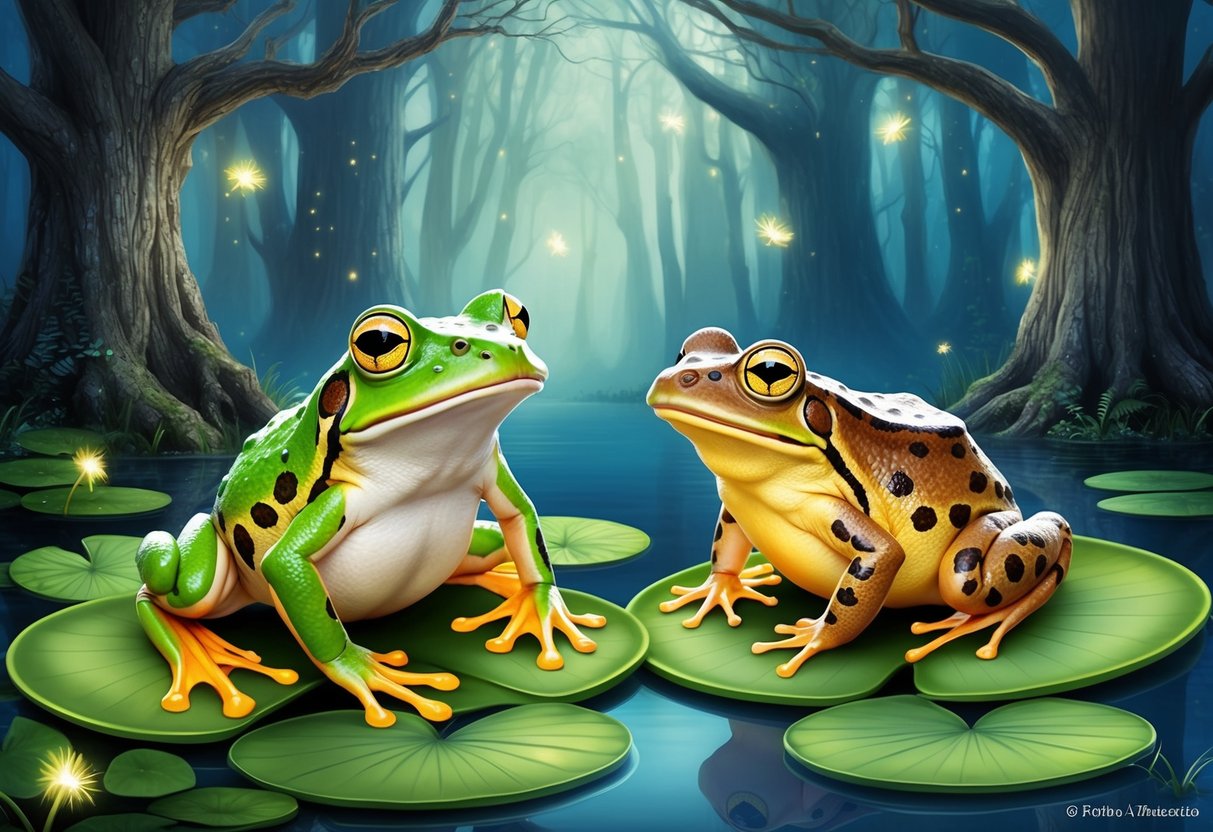
Frogs and toads have played important roles in fairy tales for centuries. These amphibians often appear as transformed princes or princesses in stories from various cultures.
In many tales, frogs represent personal growth and transformation. The idea of a frog turning into royalty symbolizes the potential for change and improvement in one’s life.
Ancient cultures associated frogs with fertility and harmony. In Egypt and Mesopotamia, frogs were seen as symbols of new life and abundance.
Frogs in fairy tales often test the kindness of characters. How a person treats the frog can determine their fate in the story. This teaches moral lessons about compassion and looking beyond appearances.
The Brothers Grimm popularized frog characters in Western fairy tales. Their story “The Frog Prince” became one of the most well-known examples of frogs in folklore.
Some tales feature frogs or toads with magical abilities. These creatures might grant wishes, offer wisdom, or possess other supernatural powers.
The prevalence of frogs in fairy tales across different cultures highlights their universal appeal as storytelling elements. They serve as versatile symbols that can represent both positive and negative traits.
Cultural Representations
Frogs and toads appear in fairy tales across many cultures. These amphibians often symbolize transformation, fortune, and magic in stories from different parts of the world.
European Traditions
In European fairy tales, frogs often represent hidden royalty or nobility. The Brothers Grimm story of The Frog Prince is a prime example. In this tale, a princess meets a frog who is actually a prince under a spell.
The frog asks for a kiss to break the enchantment. This story teaches lessons about keeping promises and looking beyond appearances.
Another common theme in European folklore is frogs as symbols of fertility and rebirth. This connects to their real-life cycle of transformation from tadpole to adult.
Asian Perspectives
Asian cultures often view frogs and toads more positively than European traditions. In Chinese folklore, the toad is seen as a creature of good fortune and prosperity.
The legendary figure Liu Hai is frequently shown with a three-legged toad, which is believed to bring wealth. This image appears in many Chinese stories and art pieces.
In Japan, frogs symbolize safe returns. This comes from the word “kaeru” meaning both “frog” and “return home.” Japanese fairy tales often feature frogs as helpful creatures or wise advisors.
African Interpretations
African folktales featuring frogs and toads often focus on their connection to water and rain. In many African cultures, frogs are seen as rain-bringers or water spirits.
Some stories portray frogs as tricksters, using their wit to outsmart larger animals. This reflects the frog’s small size but loud voice in nature.
African tales may also use frogs to teach moral lessons. For example, a boastful frog might be humbled, teaching children about the value of modesty.
Iconic Fairy Tales with Frogs and Toads
Frogs and toads play important roles in several well-known fairy tales. These amphibians often appear as enchanted characters or magical helpers.
The Frog Prince
The Frog Prince is a classic fairy tale about a princess who befriends a frog. The frog asks the princess to let him eat from her plate and sleep on her pillow.
She reluctantly agrees. After spending time together, the princess learns to care for the frog. In some versions, she kisses him. In others, she throws him against a wall in anger.
Either way, the frog transforms into a handsome prince. He had been under a witch’s spell. The prince and princess then marry and live happily ever after.
This tale teaches lessons about keeping promises and looking beyond appearances.
Thumbelina
Thumbelina is a tiny girl no bigger than a thumb. During her adventures, she meets a toad who wants to marry her to his son.
The toad kidnaps Thumbelina while she sleeps. He takes her to his lily pad home. Thumbelina is very upset by this plan.
Luckily, friendly fish and a butterfly help Thumbelina escape. She floats away on a lily pad to safety.
The toad in this story represents an unwanted suitor. Thumbelina’s escape shows her desire for freedom and to choose her own path in life.
The Well of the World’s End
In this Scottish fairy tale, a cruel stepmother sends her stepdaughter to get water from the Well of the World’s End. This is an impossible task.
At the well, the girl meets a frog. He offers to help if she promises to do everything he asks for three nights. She agrees out of desperation.
The frog fills her bucket. Later, he comes to her house demanding food, drink, and to sleep in her bed. On the third night, the frog asks her to chop off his head.
When she does, he turns into a handsome prince. They marry and live happily. This tale has themes of kindness, keeping promises, and not judging by appearances.
Themes and Morals
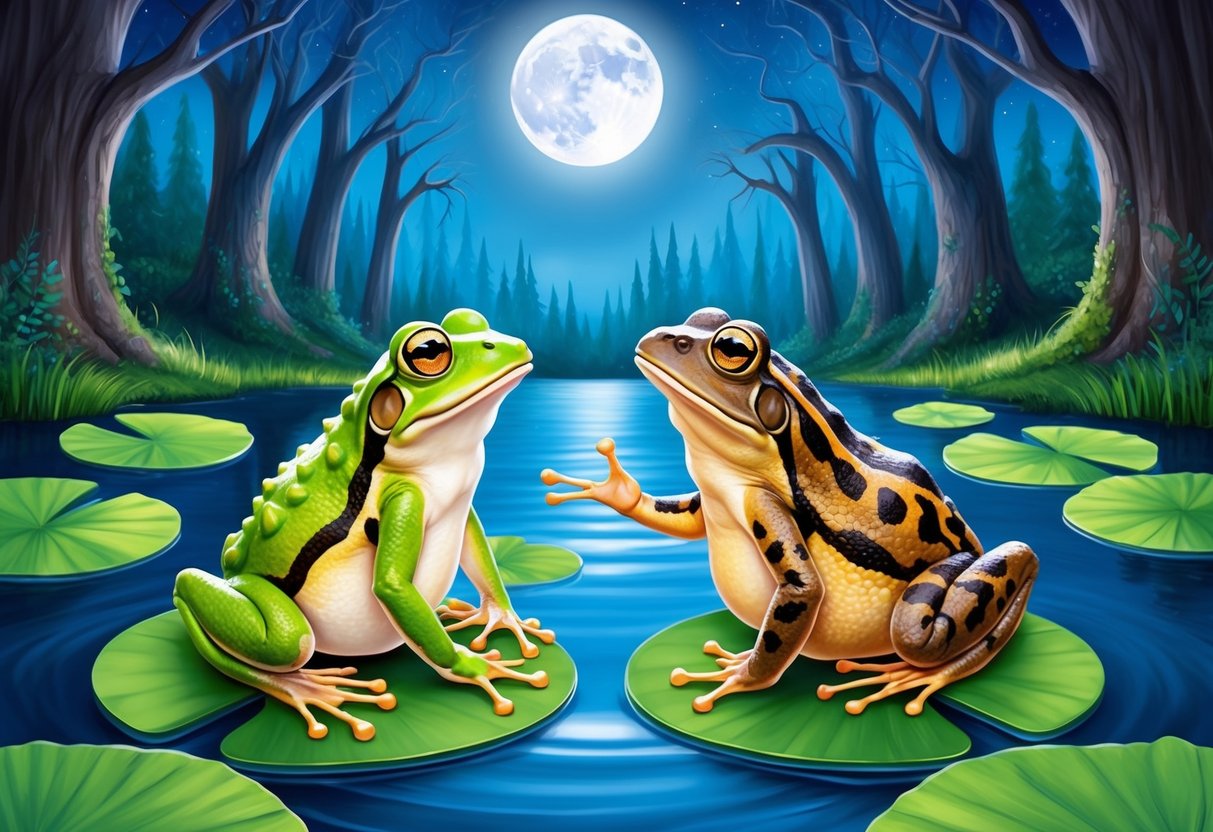
Fairy tales with frogs and toads explore deep themes about human nature and society. These stories teach important lessons through magical transformations and clever animal characters.
Transformation and Renewal
The frog prince tale shows how appearances can be deceiving. A princess must look past a frog’s slimy exterior to see his true nature.
This story teaches that kindness and keeping promises are important. When the princess finally accepts the frog, he changes into a handsome prince.
The transformation represents personal growth and second chances. It reminds readers not to judge others based on looks alone.
True Beauty and Acceptance
Many frog tales focus on inner beauty versus outer appearance. Characters learn to value kindness and good character over physical attractiveness.
In some versions, the frog only transforms after the princess accepts him as he is. This shows that true love means accepting someone fully, flaws and all.
These stories encourage readers to look beyond surface-level judgments. They promote empathy and understanding for those who seem different.
Wisdom and Cunning
Frogs and toads in fairy tales are often wise or cunning creatures. They use their wits to overcome challenges or help humans in need.
In “Diamonds and Toads”, a kind girl is rewarded with diamonds falling from her mouth when she speaks. Her mean sister gets toads instead.
This tale teaches that goodness is rewarded while cruelty leads to punishment. It shows how wisdom and kindness are more valuable than outward beauty or wealth.
Character Analysis of Frogs and Toads
Frogs and toads play important roles in fairy tales, often appearing as transformed humans or magical creatures. Their characters range from helpful princes to mischievous tricksters.
Protagonists as Frogs or Toads
In many fairy tales, frogs or toads are actually enchanted princes. The most famous example is the Frog Prince story. These amphibian heroes are usually kind, patient, and loyal. They wait for a princess to break their curse through a kiss or act of kindness.
Some key traits of frog/toad protagonists:
- Wisdom beyond their appearance
- Ability to speak
- Desire to return to human form
Their transformations often teach lessons about looking beyond outward appearances. The contrast between their slimy exterior and noble character creates interesting story dynamics.
Antagonists and Helpers
Frogs and toads also appear as villains or magical helpers in fairy tales. As antagonists, they may be sorcerers in disguise or agents of evil witches. These characters tend to be cunning and deceptive.
Helper frogs and toads often possess magical abilities:
- Granting wishes
- Giving advice
- Bestowing gifts or curses
In “Diamonds and Toads”, a fairy disguised as a frog rewards kindness with diamonds and punishes rudeness with toads. This shows how frogs can serve as judges of character in stories.
Influence on Modern Media
Fairy tales with frogs and toads have left a lasting mark on modern media. These stories have been adapted and reimagined across various forms of entertainment, reshaping how we view these amphibious characters.
Literature and Novels
Frog and toad fairy tales have inspired many modern books. Some authors have created new stories based on classic tales. Others have used frogs and toads as symbols in their work.
One popular example is “The Frog Prince, Continued” by Jon Scieszka. This book imagines what happens after the classic story ends. It puts a funny spin on the “happily ever after” idea.
Many young adult novels also use frog themes. These books often play with the idea of transformation and true love. They appeal to readers who grew up with the original fairy tales.
Film and Television Adaptations
Movies and TV shows have brought frog fairy tales to life on screen. These adaptations range from faithful retellings to modern twists on the classics.
Disney’s “The Princess and the Frog” is a well-known example. This movie gave black girls their first Disney princess. It moved the story to New Orleans and added catchy songs.
TV shows have also used frog themes. “Once Upon a Time” included the Frog Prince story in its fairy tale mix. These adaptations keep old stories fresh for new viewers.
Animations and Cartoons
Animated shows and movies love using frog characters from fairy tales. These adaptations often add humor and bright colors to the original stories.
Many cartoons feature frogs or toads as main characters. Some are based on fairy tales, while others just use the idea of talking frogs. The popular “Frog and Toad” book series became an animated TV show.
Even when not directly based on fairy tales, many cartoons use frog transformations as a magical plot device. This shows how deep these stories have sunk into our culture.
Artistic Depictions and Symbolism
Frogs and toads in fairy tales have inspired many artistic interpretations. These amphibians often symbolize transformation, inner beauty, and unexpected magic in visual and performing arts.
Visual Arts
Artists have captured frog characters from fairy tales in various mediums. Paintings and illustrations frequently show frogs wearing crowns or interacting with princesses. The famous fairy tale “The Frog Prince” has been depicted countless times in children’s book illustrations.
In fine art, frogs sometimes represent deeper themes. David Hockney’s frog paintings sold for high prices at auctions. His work “Frogs in the Garden” fetched $252,000.
Japanese art also features frogs. During the Edo period, artist Getsuju created “Frog and Mouse”, showing these creatures in a unique light.
Performing Arts
Theater and ballet have brought frog fairy tales to life on stage. Many productions of “The Frog Prince” use elaborate costumes and sets to show the frog’s transformation.
Opera houses have also adapted frog stories. The New York Metropolitan Opera commissioned set designs featuring frogs for a production. This blend of music and visual art highlights the magic of these tales.
Puppet shows often use frog characters from fairy tales. Their ability to change shape makes them ideal for creative performances. Frog puppets can hop, swim, and even turn into princes before the audience’s eyes.
Frogs and Toads in Educational Materials
Frogs and toads are popular subjects in educational materials for children. They appear in both fiction and non-fiction books aimed at young readers.
The well-known Frog and Toad series by Arnold Lobel introduces these amphibians through charming short stories. These books help children learn about friendship and life lessons.
Non-fiction books about frogs and toads teach kids about:
- Life cycles
- Habitats
- Differences between frogs and toads
- Physical characteristics
Reading A-Z offers a book called “Frogs and Toads” for second-grade students. It covers basic information about these amphibians with supporting illustrations and photographs.
Teachers often use frog and toad themes for science units. These lessons may include:
• Observing tadpole development • Comparing frog and toad features • Learning about amphibian adaptations
Online resources provide additional materials for educators. Epic offers a collection of frog and toad books that cover various topics, from basic facts to specific species information.
Frogs and toads also appear in educational videos, interactive games, and worksheets. These materials help make learning about amphibians engaging and fun for students of different ages.
Conservation Efforts and Real-Life Amphibians
Frogs and toads aren’t just characters in fairy tales. They play important roles in real ecosystems. Many amphibian species face threats like habitat loss, pollution, and disease.
Conservation groups work hard to protect these animals. SAVE THE FROGS! holds a special day each year on April 28th. This event teaches people about frogs and how to help them.
Some amphibians have come back from the brink of extinction. The Giant Salamander in Japan and China is one success story. People are cleaning up its habitat and helping it breed.
Amphibians have been around for millions of years. They first came onto land about 368 million years ago. But they still need water to survive.
Scientists use creative ways to spread the word about saving frogs and toads. For example, a comic called “The Four-Eyed Toad and the Amphibian Pandemic” teaches people about diseases that hurt amphibians.
By protecting frogs and toads, we help keep our planet healthy. These animals eat insects and serve as food for other creatures. They’re a key part of many food chains.
Frequently Asked Questions
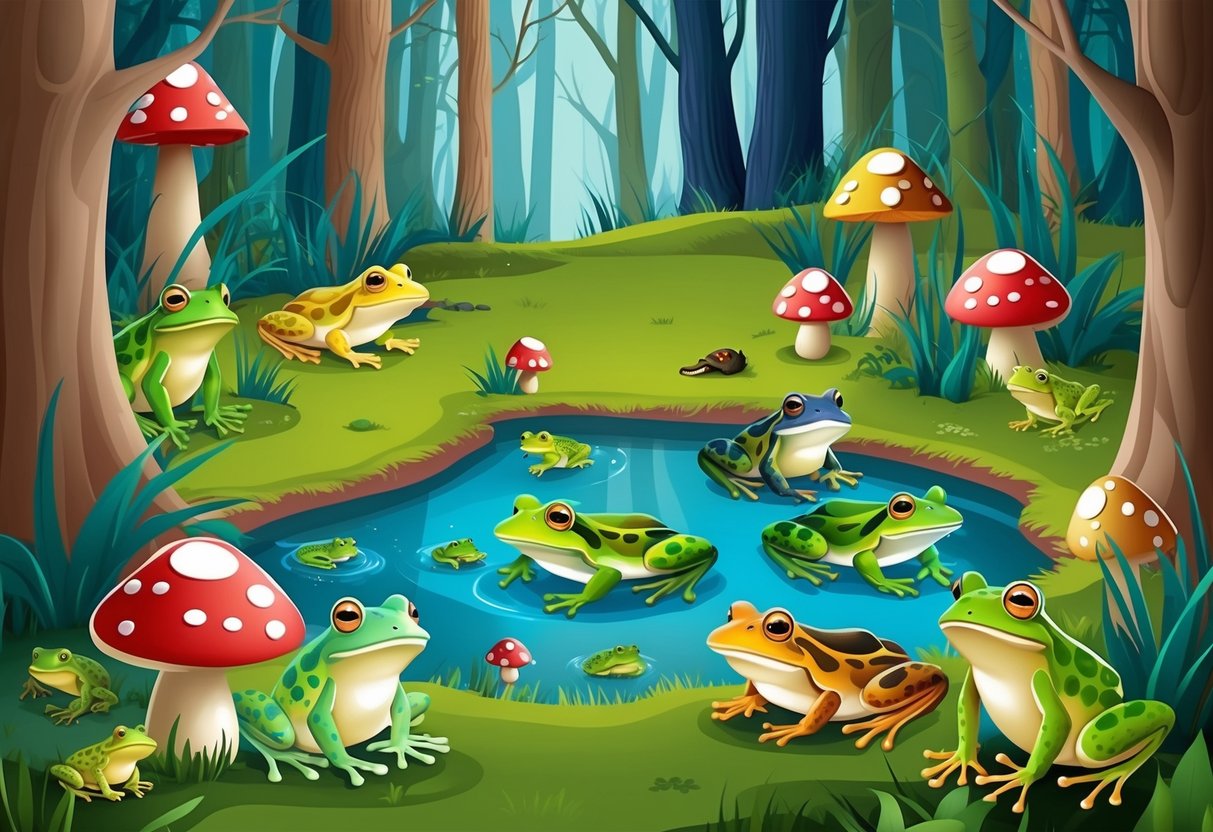
Fairy tales featuring frogs and toads often include magical transformations, important life lessons, and memorable characters. These amphibians play key roles in many beloved stories across different cultures.
What are some classic fairy tales that include frog or toad characters?
“The Frog Prince” is a well-known tale featuring a frog as a main character. “Diamonds and Toads” is another classic story that includes toads.
“The Toad” by Hans Christian Andersen is a lesser-known fairy tale about a toad’s journey.
Who are the main characters in ‘The Frog Prince’ fairy tale?
The main characters in “The Frog Prince” are the princess and the enchanted prince turned into a frog. The king, the princess’s father, also plays a role in the story.
The princess is often portrayed as reluctant to befriend the frog at first.
What is the original tale of ‘The Princess and the Frog’?
The original tale of “The Princess and the Frog” is based on the Brothers Grimm version of “The Frog Prince.” In this story, a princess’s golden ball falls into a well.
A frog retrieves it in exchange for the princess’s friendship. The frog is later revealed to be an enchanted prince.
How do frogs and toads typically feature in folklore and myths?
Frogs and toads often symbolize transformation in folklore and myths. They represent the ability to move between water and land.
In some cultures, frogs are associated with fertility and rain. Toads sometimes have connections to witchcraft or magic in folklore.
Can you list fairy tales where a transformation of a character involves a frog or toad?
“The Frog Prince” is the most famous example of a character transforming from a frog to a human. In some versions of “Diamonds and Toads,” toads come out of a girl’s mouth as a curse.
“The Toad” by Hans Christian Andersen features a toad that transforms into a beautiful maiden.
What is the significance of frogs and toads in fairy tale symbolism?
Frogs and toads in fairy tales often symbolize hidden potential or inner beauty. They also represent the idea that appearances can be deceiving.
These amphibians also symbolize transformation and metamorphosis. This mirrors their real-life cycle from tadpole to adult.