How Many Insects Do Garden Frogs Eat in a Day:
Revealing Their Voracious Appetite
Garden frogs are fascinating creatures that play a crucial role in maintaining the balance of ecosystems. These small amphibians have a big appetite for insects, making them valuable allies in natural pest control.
Many gardeners wonder just how many insects these helpful amphibians can consume in a day.
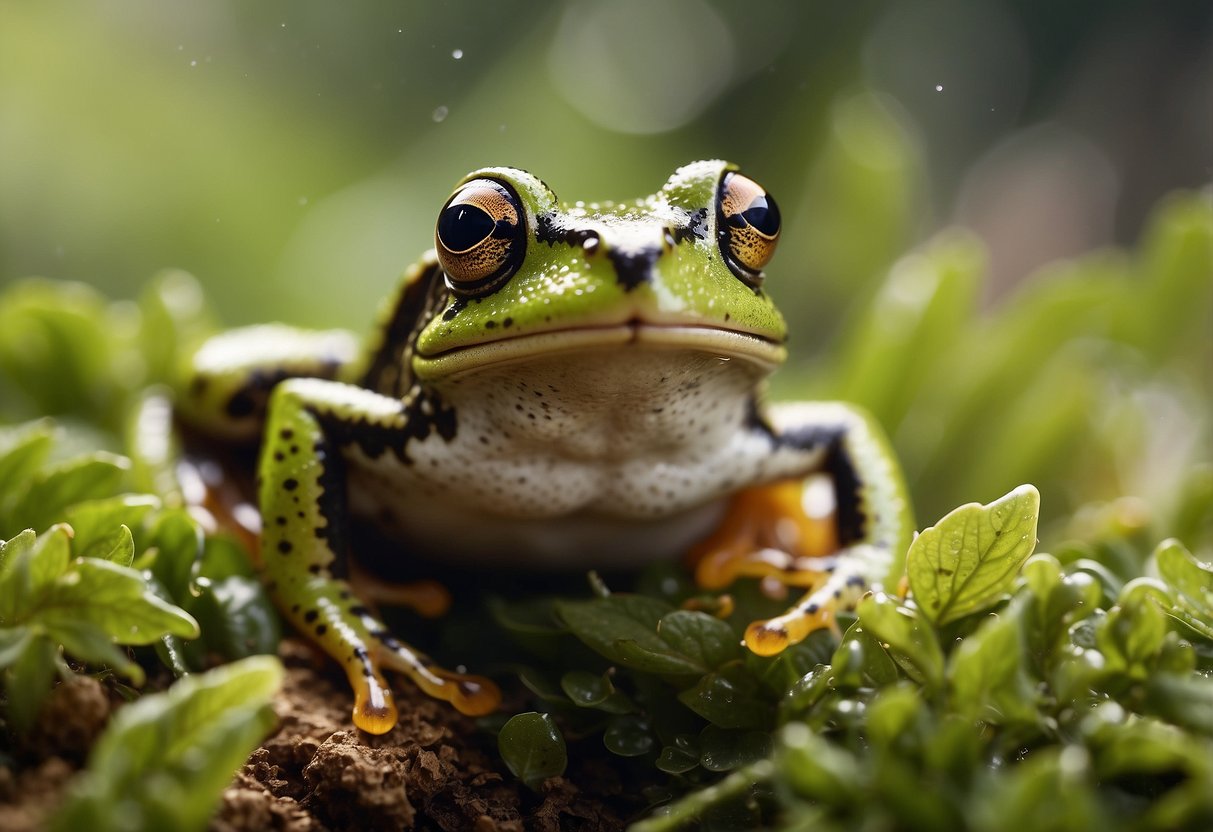
Garden frogs can eat up to 50 insects per day, depending on factors like frog size, species, and insect availability.
This impressive number showcases the frog’s ability to keep insect populations in check. Frogs eat a variety of bugs, including mosquitoes, flies, moths, and beetles.
Their diet helps protect plants from damage and reduces the need for chemical pesticides.
The eating habits of garden frogs can vary based on their environment and the time of year.
Some frogs may eat less frequently, while others consume food more often.
For example, green tree frogs can eat as many insects as they can in 15 minutes every 5 days.
This feeding pattern helps frogs maintain a healthy weight and energy level.
Key Takeaways
- Garden frogs eat up to 50 insects daily, aiding in natural pest control
- Frog diets include various insects like mosquitoes, flies, and beetles
- Feeding habits vary by species, with some frogs eating every few days
The Diet of Garden Frogs
Garden frogs eat a variety of insects and small creatures. Their diet changes based on the frog’s size and what’s available in their habitat.
Identifying Common Insects Consumed
Garden frogs eat many types of insects. Small frogs often eat ants, aphids, and fruit flies. Larger frogs may eat bigger insects like beetles and moths.
Mosquitoes are a favorite food for many frogs. This makes frogs helpful for controlling pests in gardens.
Some frogs also eat spiders, worms, and small fish. The size of the prey depends on the frog’s mouth size.
Garden frogs can eat up to 50 insects in one day. This number varies based on the frog’s size and the number of insects around.
Nutritional Value and Benefits
Insects give frogs the nutrients they need to live and grow. They are full of protein, which helps frogs build strong muscles.
Insects also provide vitamins and minerals for frogs. These help keep frogs healthy and support their growth.
Eating lots of insects helps frogs stay active. It gives them energy to hop, swim, and catch more food.
A varied diet is important for frogs. Different insects offer different nutrients. This helps frogs get all the things they need to thrive in gardens.
Feeding Behaviors of Garden Frogs
Garden frogs have unique feeding habits that help them catch prey efficiently. They use specific hunting techniques and follow regular eating patterns throughout the day.
Hunting Strategies
Garden frogs are skilled hunters that rely on their quick reflexes and sticky tongues to catch food.
They often sit still and wait for prey to come close before striking.
When an insect is near, the frog shoots out its long tongue to grab it. The tongue is covered in sticky saliva that helps trap the prey.
Frogs use their eyesight to spot moving insects. Some species can even catch flying bugs in mid-air with a well-timed leap.
Many garden frogs are nocturnal hunters. They have good night vision that lets them see insects in low light.
Daily Feeding Patterns
Garden frogs typically eat multiple times per day. Their feeding schedule often follows the activity patterns of their insect prey.
Most garden frogs are most active at dawn and dusk. During these times, they hunt for insects that are also becoming active.
A frog may eat 10-20 small insects in a single feeding session. Larger frogs can consume more prey in one sitting than smaller species.
Frogs don’t need to eat every day. They can go several days between meals if food is scarce. When prey is abundant, they may eat more to build up fat stores.
Weather affects feeding habits. Frogs eat more on warm, humid nights when insects are plentiful. They eat less during cold or dry spells.
Factors Influencing Insect Consumption
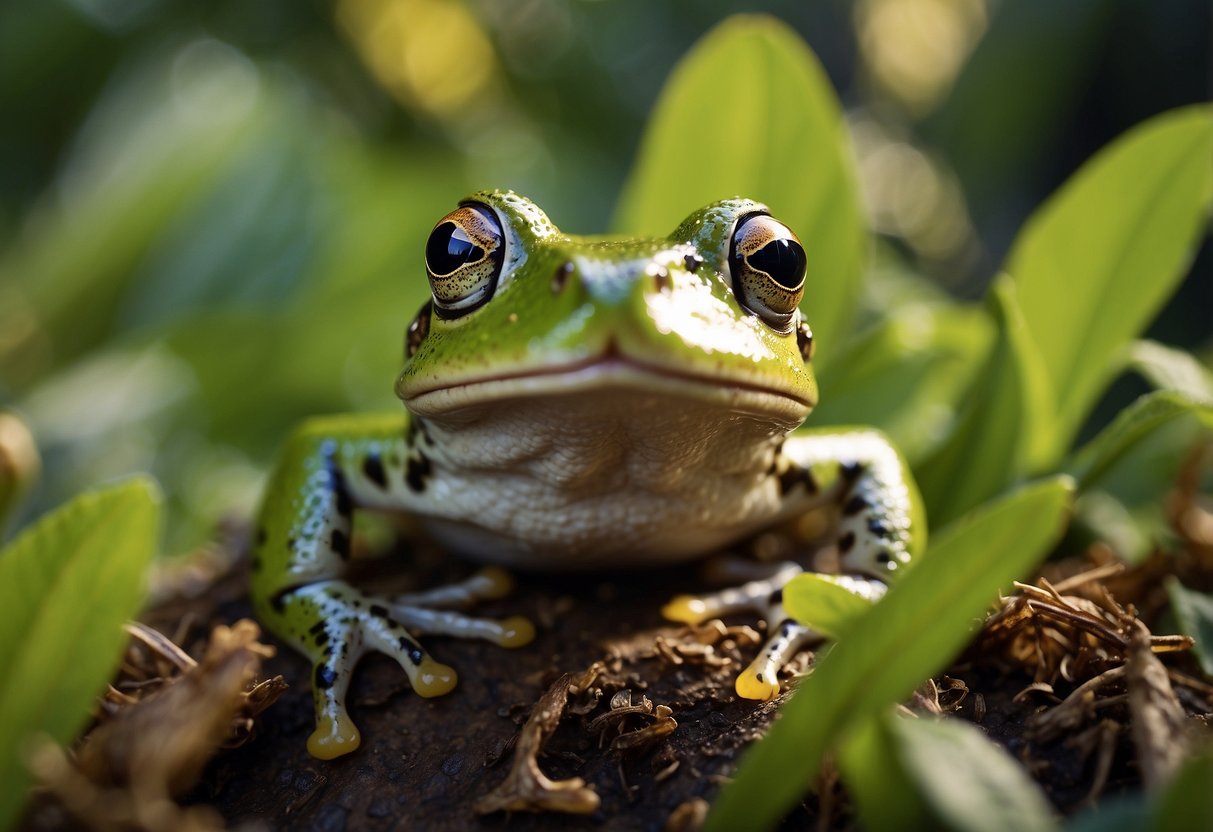
Garden frogs’ insect consumption varies based on several key factors. These include changes in seasons, the frog’s age and size, and the availability of insects in their habitat.
Seasonal Variations
The number of insects frogs eat changes with the seasons. In spring and summer, frogs are more active and hungry. They eat more insects during these warm months.
Frogs may eat up to 50 insects in a single day during peak seasons. This high consumption helps them build up energy reserves.
In fall, frogs start to slow down. They eat less as they prepare for winter. During winter, many frogs hibernate and don’t eat at all.
Age and Size of Frogs
A frog’s age and size greatly affect how many insects it eats. Younger, smaller frogs eat fewer insects than older, larger ones.
Small frogs like tree frogs may only eat a few insects a day. Larger species can eat much more.
As frogs grow, their appetite increases. Adult frogs need more food to maintain their larger bodies. They can catch and eat bigger insects too.
Availability of Prey
The number of insects in a frog’s habitat affects how much it eats. More insects mean frogs can eat more.
Studies show that frog eating habits depend on prey density. In areas with lots of insects, frogs eat more often.
Frogs are adaptable eaters. They eat what’s available. This might include:
- Worms
- Spiders
- Water beetles
- Small fish
Frogs will eat any living prey that fits in their mouth. This flexibility helps them survive in different environments.
Ecological Impact of Garden Frogs
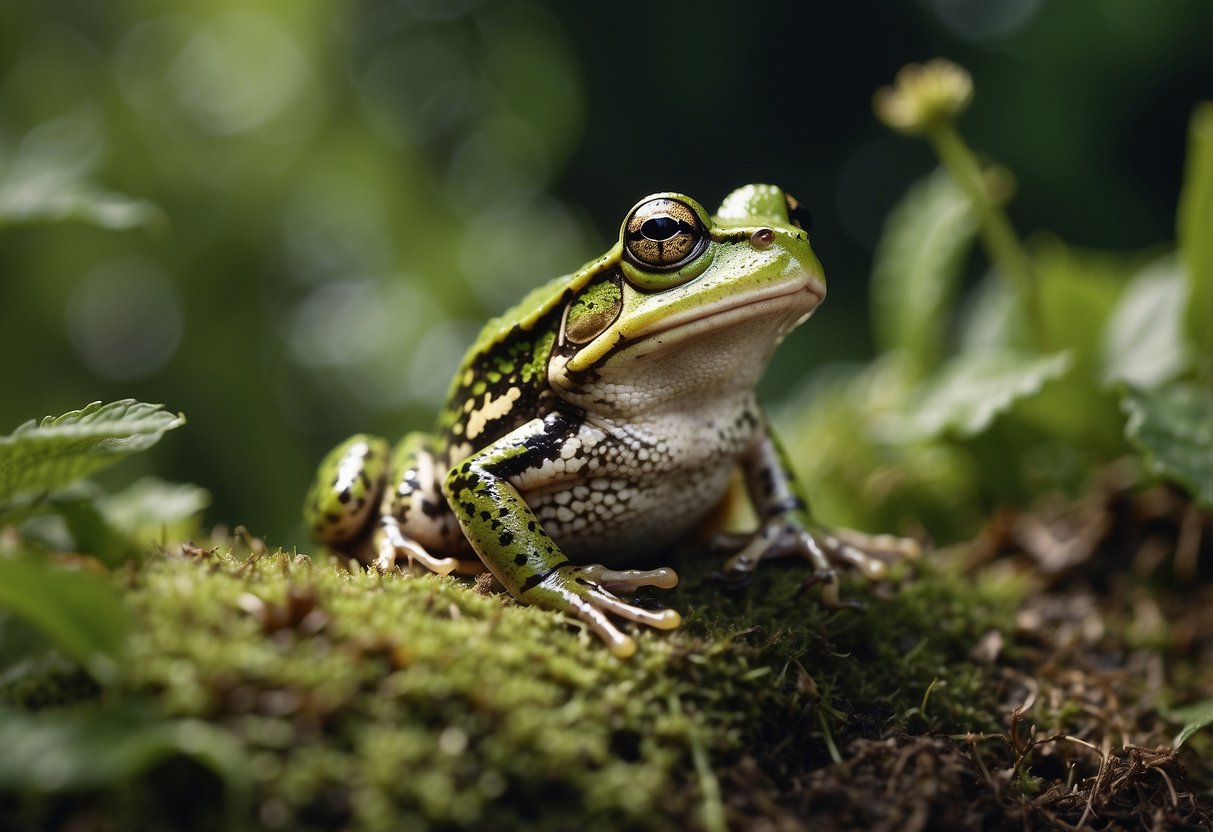
Garden frogs play a crucial role in maintaining ecological balance. They help control pests and contribute to biodiversity in backyard ecosystems.
Pest Control
Garden frogs are excellent at controlling garden pests. They eat a wide variety of insects, including mosquitoes, flies, moths, and beetles. This natural pest control helps reduce damage to garden plants.
Frogs can consume large numbers of insects daily. Their appetite for pests means fewer harmful bugs in the garden.
By eating insects, frogs reduce the need for chemical pesticides. This makes gardens more eco-friendly and safer for other wildlife.
Biodiversity and Balance
Frogs act as both predator and prey in garden ecosystems. They help maintain a balanced food web.
Frogs are natural predators in the garden environment. They eat small insects and invertebrates, keeping their populations in check.
At the same time, frogs serve as food for birds, snakes, and other animals. This helps support a diverse range of wildlife in the garden.
Frog populations can indicate environmental health. Their presence often signals a well-balanced ecosystem with clean water and minimal pollution.
Research and Observations
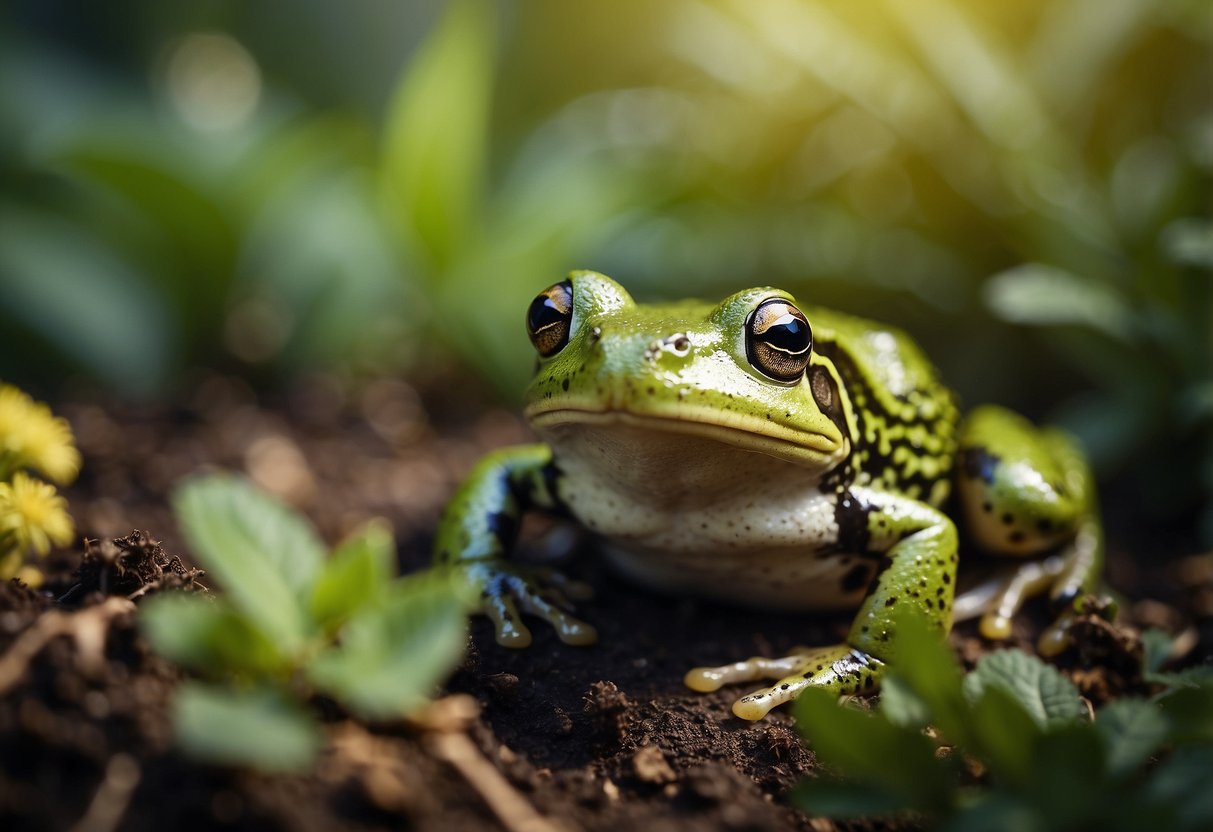
Studies show garden frogs eat many insects daily. The exact number varies based on frog size and insect availability. Researchers have used different methods to measure frog diets.
Quantitative Studies
Scientists have tracked frog eating habits in controlled settings. One study found that common tree frogs eat a few insects per day. Larger frogs consume more. For example, African bullfrogs can eat up to 50 insects daily.
Habitat affects consumption too. Frogs in insect-rich areas eat more.
Researchers observed juvenile frogs eating 7-10 insects twice a day. Adult frogs need less frequent meals.
A 15-minute feeding test revealed interesting results. Green tree frogs ate as many insects as they could in this time. Scientists repeated this test every 5 days.
Expert Analysis
Frog experts have analyzed feeding patterns across species. They found that frog size impacts insect consumption. Larger frogs naturally eat more insects than smaller ones.
Diet variety is important too. While insects form the bulk of a garden frog’s diet, they also eat other small creatures. This includes worms, slugs, and even small fish.
Experts note that feeding habits change with age. Young frogs need daily meals. Adult frogs can go longer between feedings. Some high-energy species, like dwarf frogs, need constant access to food.
Conservation and Habitats
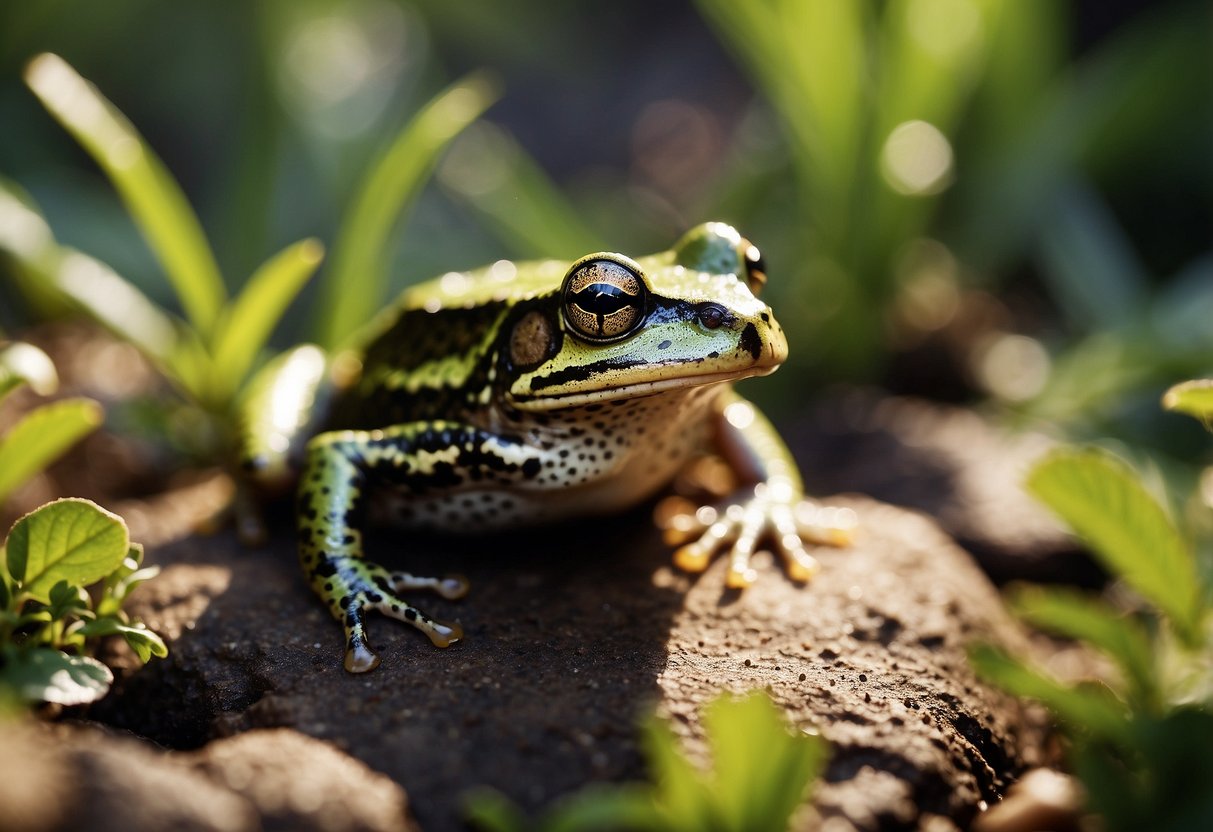
Frogs face many threats in the wild. Protecting their habitats and creating frog-friendly spaces are key to helping these important animals thrive.
Protecting Frog Populations
Frogs are in danger worldwide. Nearly 900 species are listed as endangered, with over 500 critically endangered.
Habitat loss is a major threat. Wetlands and forests where frogs live are often drained or cleared for development.
Pollution also harms frogs. Pesticides and other chemicals can poison them directly. These toxins can also kill the insects frogs eat.
Climate change is another big problem. It alters rainfall patterns and temperatures that frogs need to survive.
Conservation efforts focus on protecting frog habitats. This includes preserving wetlands and forests. It also means reducing pollution and pesticide use. Captive breeding programs help boost populations of rare species.
Creating Frog-Friendly Gardens
People can help frogs right in their own yards. Frog-friendly gardens provide food, water, and shelter for these amphibians.
A small pond or water feature is ideal for frogs. It should have shallow areas and plants for cover.
Avoid using chemicals in the garden. These can harm frogs and their insect prey.
Native plants are best for attracting insects that frogs eat. Leave some areas of the yard wild and messy. Frogs like to hide under leaves and logs.
Providing a mix of sunny and shady spots helps frogs regulate their body temperature. Avoid mowing too often, as this can harm frogs hiding in tall grass.
Frequently Asked Questions
Garden frogs have diverse eating habits that vary based on size, species, and habitat. Their diets consist mainly of insects, but can include other small creatures as well.
What is the daily dietary requirement of garden frogs in terms of insect consumption?
Garden frogs typically eat 10-20 insects per day. Larger frogs may consume more, while smaller species eat fewer. The exact amount depends on the frog’s size and activity level.
What variety of insects do garden frogs eat on a daily basis?
Garden frogs eat a wide range of insects. Their diet often includes flies, moths, butterflies, wasps, ants, and crickets. They also consume beetles, grasshoppers, and other small invertebrates found in gardens.
How does the feeding frequency of garden frogs vary with their size and species?
Feeding frequency varies among frog species and life stages.
Young frogs usually eat once daily, while adult frogs may only need to feed every 2-3 days.
Larger species like bullfrogs may eat less often but consume more at each feeding.
Can frogs regulate their intake, and do they stop eating when satiated?
Frogs can regulate their food intake. They typically stop eating when full to avoid overfeeding. In captivity, it’s recommended to feed frogs for about 15 minutes at a time to prevent overeating.
Besides insects, what are other common components of a garden frog’s diet?
While insects make up the bulk of a garden frog’s diet, they may also eat other small creatures. This can include spiders, worms, snails, and even small fish or tadpoles for larger frog species.
What are the feeding habits of frogs living in aquatic environments?
Aquatic frogs have different feeding habits compared to garden frogs. They often eat underwater insects, larvae, and small aquatic animals. Some species consume algae or plant matter as well.