Types of Tree Frogs in Florida: A Friendly Guide to These Vibrant Amphibians
One of my favorite aspects of Florida is the diverse and engaging wildlife. Lizards run on sills and nearby shrubs. Frogs jump across walkways. And many types of tree frogs in Florida can be seen around the state.
Florida is home to a fascinating variety of tree frogs, making it a great place for amphibian enthusiasts. There are 17 different species of tree frogs in Florida, and each one has unique characteristics and behaviors that make them stand out.
From their vibrant colors to their distinct calls, these frogs are an integral part of Florida’s diverse ecosystems.
Some tree frogs are more common than others and can be spotted easily, while others might require a bit of patience to find.
For instance, the Cuban Treefrog is frequently seen in urban areas, often near lights where they catch insects.
In contrast, other species might prefer more secluded habitats like wetlands and forests.
Learning about these tree frogs not only enhances our appreciation for them but also helps us understand their role in the environment.
By knowing more about these incredible amphibians, we can better support their conservation and protect their habitats.
Key Takeaways
- Florida has 17 different species of tree frogs.
- Tree frogs can be found in various habitats from urban areas to forests.
- Understanding tree frogs helps in their conservation and protection.
Overview of Tree Frogs in Florida
There are many kinds of tree frogs in Florida. Each one has its own special traits and habitats. I love learning about them because they are so unique and colorful.
Common Tree Frog Species
Green Tree Frog: This bright green frog is often seen in gardens and near water.
Gray Tree Frog: Found mostly in the northern areas and panhandle, it blends into gray surroundings.
Cuban Tree Frog: An invasive species, it can grow quite large and has warty skin.
Habitats
Tree frogs in Florida live in a variety of places. Some like pine flatwoods and cypress swamps. Others can be found in gardens, forests, and near ponds or lakes.
Interesting Features
Tree frogs have some cool features. They have sticky pads on their toes that help them climb. Some have bright spots on their thighs, while others have a “bandit mask” on their face.
Table of Common Tree Frogs
| Frog Species | Color | Unique Trait |
|---|---|---|
| Green Tree Frog | Bright Green | Sticky toe pads |
| Gray Tree Frog | Gray | Blends into gray surroundings |
| Cuban Tree Frog | Various (warty skin) | Can grow very large |
| Pine Woods Tree Frog | Tan, gray, green | Orange or whitish-yellow thigh spots |
Exploring these little creatures is always fascinating. Each frog has its own story and role in Florida’s ecosystems.
Common Species of Tree Frogs
Florida is home to several unique tree frog species. Each species has its own characteristics and behaviors, making them fascinating to observe.
Green Tree Frog
The Green Tree Frog is one of the most recognizable and common tree frogs in Florida. These frogs are typically bright green with a white or yellow stripe running from their jaw down their sides.
They prefer habitats near water such as ponds, marshes, and streams.
I often hear their distinctive, high-pitched calls at night, usually after a rain. They feed primarily on insects, which makes them helpful for controlling pest populations.
Squirrel Tree Frog
Squirrel Tree Frogs are smaller and more varied in color compared to other tree frogs. They can range from green to brown and often have mottled patterns.
These frogs are quite adaptable, living in a variety of environments from forests to urban areas.
When I spot them, they’re usually hiding under leaves or climbing on walls. They also have a loud, chattering call that sounds similar to a squirrel, hence their name.
Barking Tree Frog
The Barking Tree Frog gets its name from its barking sound, which can be quite loud.
These frogs are typically green with dark, round spots on their backs. They are the largest tree frogs in Florida, sometimes reaching up to 3 inches in length.
They prefer sandy areas and pine forests but can also be found near bodies of water. The Barking Tree Frog can change its color to blend into its surroundings, which is quite fascinating to watch.
I often find them active at night when they are hunting for insects.
Pine Woods Tree Frog
Pine Woods Tree Frogs are small and have a significant range of colors, from brownish-grey to reddish-brown or greyish-green.
They are well-camouflaged with dark markings on their backs.
These frogs are native to the southeastern United States and are commonly found in pine forests, as their name suggests.
They have a unique clattering call that sounds like someone tapping on a tin can. When walking through pine woods, I sometimes hear their calls echoing through the trees. Their diet mainly consists of small insects, which they catch with remarkable agility.
Habitats and Ecosystems
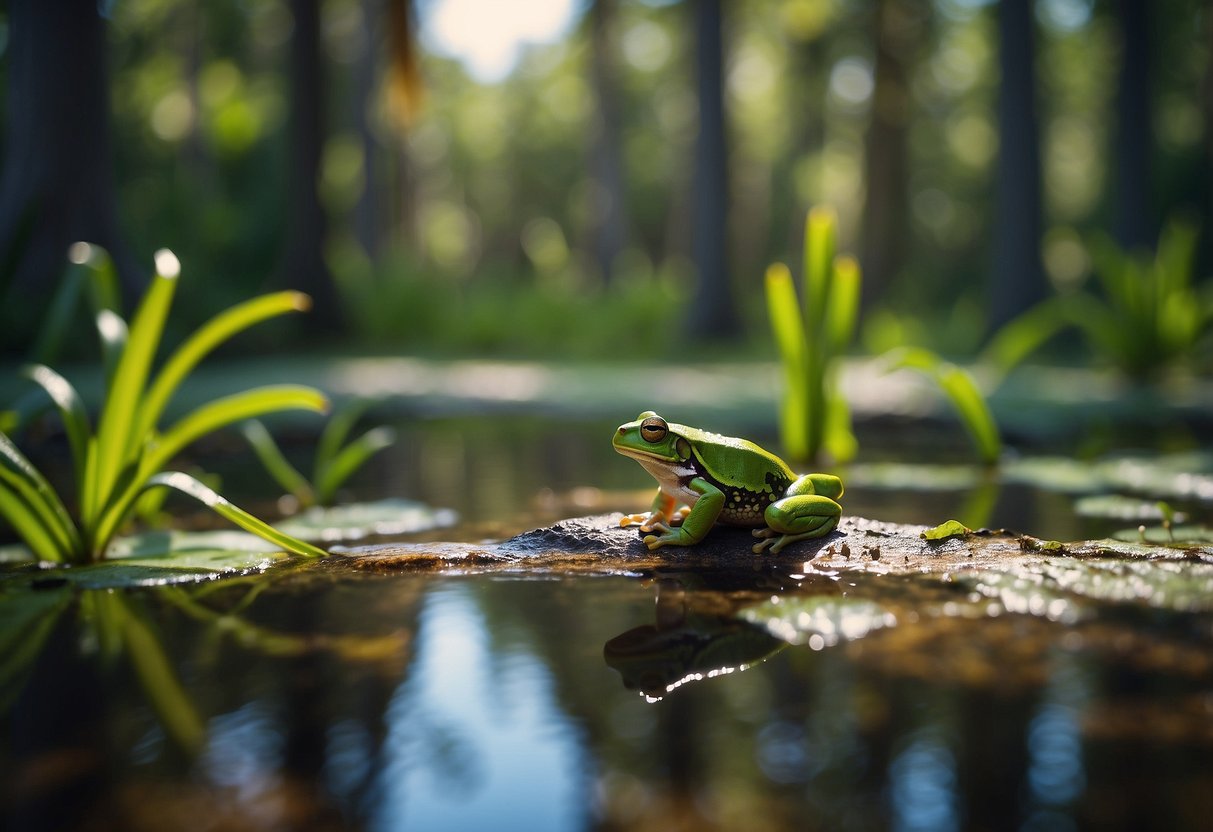
Tree frogs in Florida can be found in various habitats, each offering unique conditions for their survival.
From wetlands and swamps to forests and even urban areas, these habitats provide food, shelter, and breeding grounds.
Wetlands and Swamps
Wetlands and swamps are prime habitats for many tree frogs. The constant availability of water and high humidity levels create perfect conditions for them.
One of the common tree frogs in these areas is the Green Tree Frog. They thrive in watery environments like marshes, swamps, and wet prairies.
They can often be seen clinging to reeds and other vegetation near water bodies.
Wetlands also offer an abundant food supply. Insects, spiders, and even small lizards found in these environments form the main diet of many tree frog species.
Tree frogs find plenty of hiding spots in wetlands. The dense vegetation and water bodies offer protection from predators and harsh weather.
Forests and Woodlands
Forests and woodlands are another important habitat. Trees and dense underbrush provide ideal conditions for arboreal frogs.
In these areas, tree frogs can hide in the bark of trees and in the leaves.
The humidity and shade provided by the forest canopy create a moist environment suitable for their skin, which needs to stay hydrated.
The Squirrel Tree Frog is often found in wooded areas. These frogs can blend in with the green and brown surroundings, making it easier to avoid predators.
Forests also provide a wide range of prey. Various insects are abundant here, providing a steady diet for tree frogs.
Suburban and Urban Areas
Interestingly, some tree frogs have adapted to suburban and urban environments. They can be found in gardens, parks, and even backyards.
Tree frogs like the Cuban Tree Frog are known to thrive in human-altered landscapes.
They can often be seen around outdoor lights at night, where they hunt insects drawn to the light.
Human-made structures, like window sills, rain gutters, and even mailboxes, provide unusual but effective shelters for these adaptable amphibians.
In urban areas, tree frogs benefit from the reduced number of predators and the abundance of food, especially insects.
They often find breeding sites in artificial water sources such as garden ponds and birdbaths.
Physical Characteristics
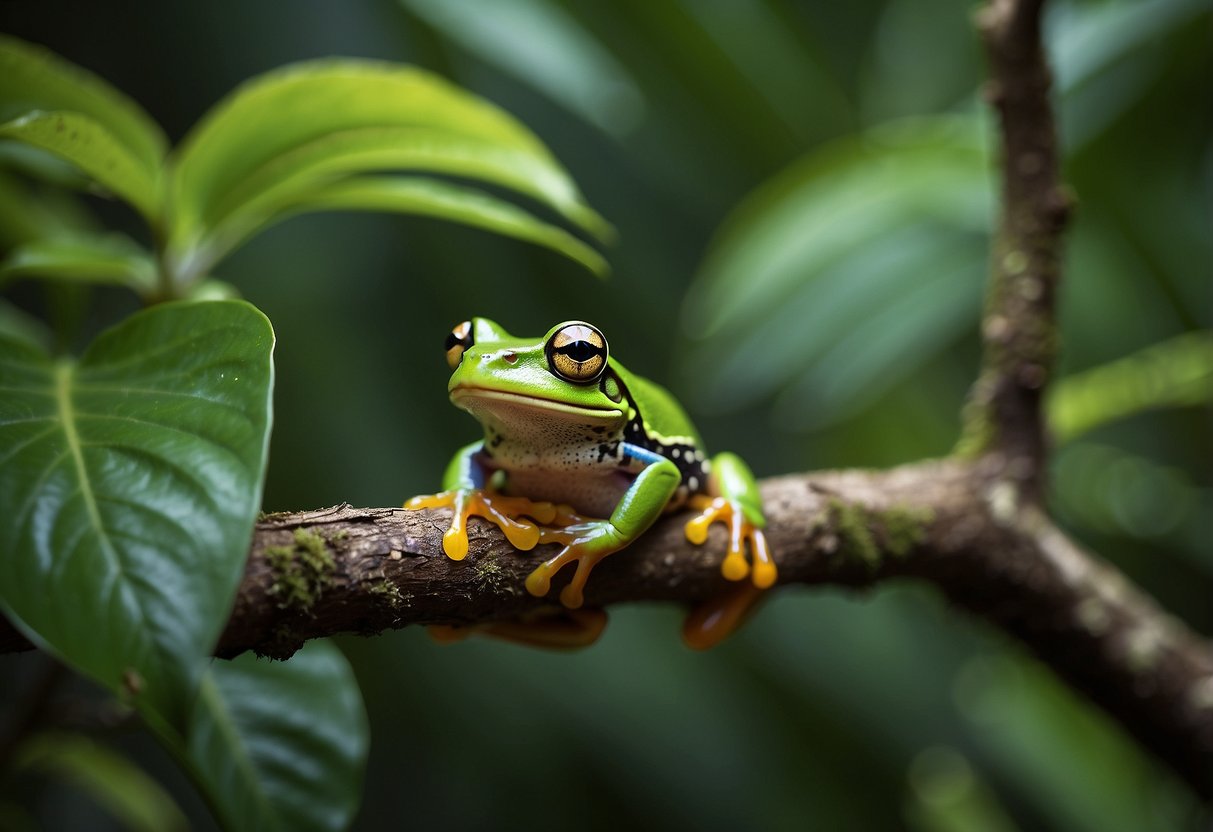
Tree frogs in Florida come in various sizes and colors, and they have unique adaptations that help them thrive in their habitats.
Size and Coloration
Tree frogs in Florida vary in size. The smallest can be around half an inch long, while some species can reach up to 3 inches in length. For instance, the Spring Peeper is typically 1 to 1.5 inches long.
Coloration among these frogs also varies. The Green Tree Frog, as the name suggests, is mostly green.
On the other hand, the Squirrel Tree Frog can be gray or light green with dark brown or black markings. Cope’s Gray Tree Frog, the only gray species in Florida, has a distinct gray color.
These color variations can help them blend into their surroundings, providing camouflage against predators.
Adaptations and Features
Tree frogs have great adaptations that make them perfect for life in trees. They have toe pads that are sticky, allowing them to grip and climb on smooth surfaces.
Their skin is often smooth and can secrete substances that make it slippery to deter predators.
Some species can even change color to match their environment better.
For breathing, these frogs rely on cutaneous respiration, which means they can absorb oxygen through their skin.
This adaptation helps them stay underwater for longer periods.
Additionally, their loud and distinctive calls are used for attracting mates and marking territory during the breeding season.
Behavior and Lifestyle
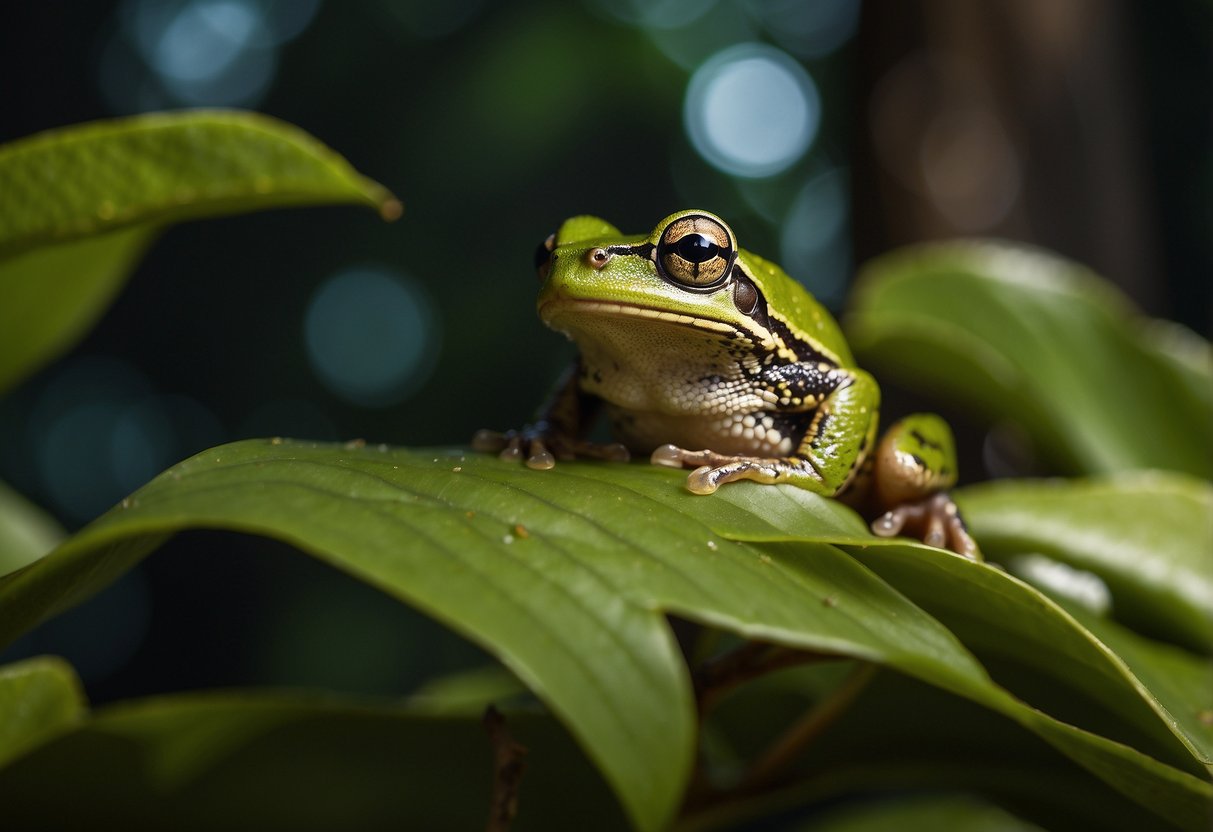
Tree frogs in Florida have fascinating behaviors and lifestyles. They have unique feeding habits, a distinct reproduction cycle, and specific vocalizations.
Feeding Habits
Tree frogs mainly eat insects and other small invertebrates. In my observations, they are particularly fond of mosquitoes, flies, and beetles.
They are excellent hunters and use their long, sticky tongues to catch prey.
They usually hunt at night, relying on their keen eyesight and sensitivity to movements. By doing so, they avoid many predators and also help manage insect populations.
I’ve noticed that some species also eat spiders and small mollusks.
In captivity, they can be fed a diet of crickets, mealworms, and even small pinky mice for larger species.
Reproduction and Lifecycle
Tree frogs have an interesting breeding season, typically happening in the warmer months.
Males call loudly to attract females to breeding sites, usually near ponds, ditches, or marshes.
Once mating occurs, females lay eggs in water. The eggs hatch into tadpoles, which then grow and undergo metamorphosis.
This process transforms them into juvenile frogs, capable of living on land.
I find it amazing that some species’ tadpoles can develop in a few weeks, while others may take several months.
The entire lifecycle from egg to adult can vary widely, depending on the species and environmental conditions.
Vocalizations and Calls
Male tree frogs are known for their distinctive calls, especially during the breeding season. Each species has its own unique call, which helps females identify suitable mates.
These calls can be quite loud and are often heard at night near water bodies. I’ve heard calls that range from high-pitched trills to deep croaks.
Females are generally quieter, but may sometimes produce soft calls in response to males. The calls are also used to establish territories and ward off other males.
I’ve learned that some species can change the intensity of their calls based on weather conditions or the presence of predators, adding another layer of complexity to their communication.
Conservation and Threats
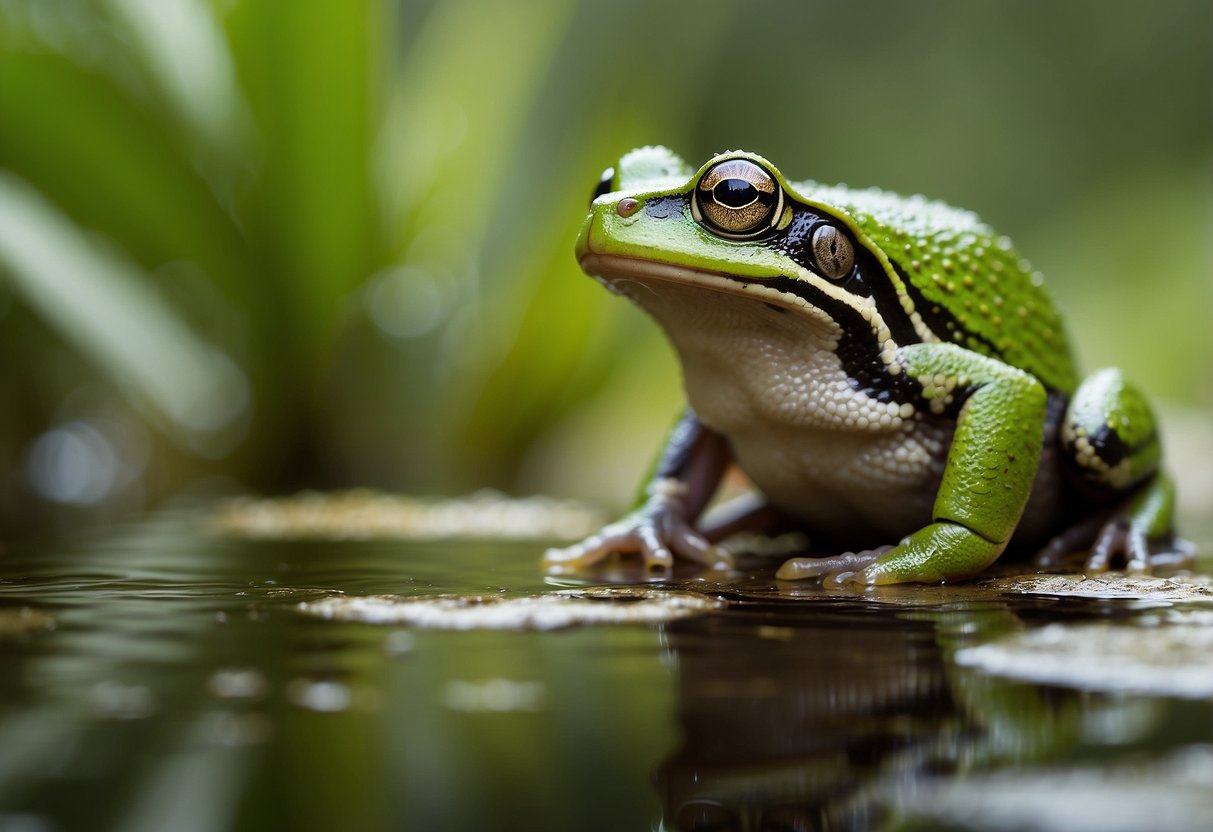
Florida’s tree frogs face several challenges, including endangered species issues, habitat loss, and conservation efforts. It’s important to understand these elements to help protect these fascinating creatures.
Endangered Species
The Gopher Frog is one of the tree frogs in Florida that is endangered. It lives in pine forests and is known for its distinctive call that sounds like a deep snore. Another species at risk is the Pine Barrens Tree Frog. It’s impacted by habitat destruction and changes in water quality.
Why are these species endangered?
- Habitat loss due to urban development and agriculture.
- Pollution affecting water bodies.
- Predation by invasive species like the Cuban Treefrog.
Conserving these species is essential for maintaining biodiversity in Florida’s ecosystems. In fact, retaining each of the many types of tree frogs in Florida is critical.
Habitat Loss
Large areas of natural habitats are being destroyed. Urban expansion, agricultural activities, and deforestation are the main causes.
Effects of habitat loss include:
- Reduced breeding grounds for tree frogs.
- Limited food sources.
- Increased competition for resources.
When tree frogs lose their homes, they face higher risks of predation and lower chances of survival. Habitat restoration and protection are key strategies to combat habitat loss.
Conservation Efforts
Efforts are being made to conserve tree frog populations. Many organizations in Florida work to protect these amphibians and their habitats.
Major conservation strategies are:
- Habitat Restoration: Replenishing and maintaining natural areas.
- Education: Informing the public about tree frogs and their importance.
- Legislation: Implementing laws to protect habitats and species.
Local Projects:
- The University of Florida has programs focusing on identifying and monitoring tree frog populations.
- Wildlife organizations are actively involved in removing invasive species to protect native tree frogs.
These efforts are vital for ensuring the survival of Florida’s tree frog species. By participating in local conservation activities, we can all help make a positive difference.
Interaction With Humans
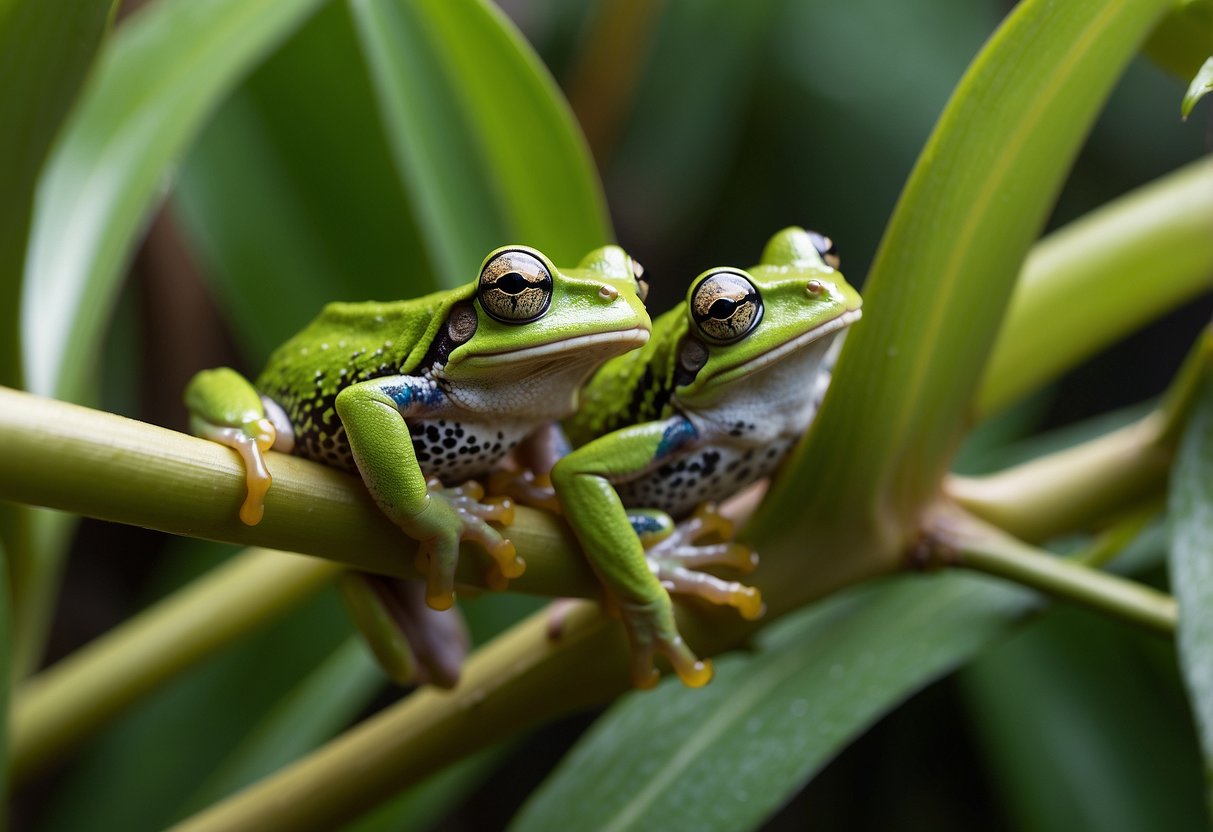
Tree frogs in Florida have unique interactions with people, involving both benefits and learning opportunities.
Pest Control
Tree frogs, including the invasive Cuban Treefrog, are known to eat various pests. They feed on insects such as mosquitoes, beetles, and spiders. This can be very helpful in reducing the number of annoying bugs around homes. However, the Cuban Tree Frog encroaches on native tree frog habitats. In fact, it is responsible for dwindling numbers of the natives and may change the eco-system.
These frogs are often found near outdoor lights, catching the insects that are attracted to the light. While they might seem a bit pesky by clustering near lights, they’re actually doing a good job at keeping the insect population in check.
However, it’s important to control the population of nonnative species, like the Cuban Treefrog, since they can become invasive, eating native frogs and competing with them for food.
Educational Opportunities surrounding the types of tree frogs in Florida
Tree frogs provide excellent chances for education. Schools and nature centers often use them to teach students about amphibian life and environmental science.
Programs might include exploring their habitats, understanding their life cycles, and learning about their role in the ecosystem. When students get to see tree frogs up close, like in a classroom visit or a field trip, it makes learning much more engaging.
In urban areas, tree frogs can be seen near houses, making it easy for families to observe them. This interaction promotes curiosity and respect for wildlife among young people. Learning about local species helps to foster a deeper connection to nature and encourages conservation efforts.
Frequently Asked Questions about the types of tree frogs in Florida
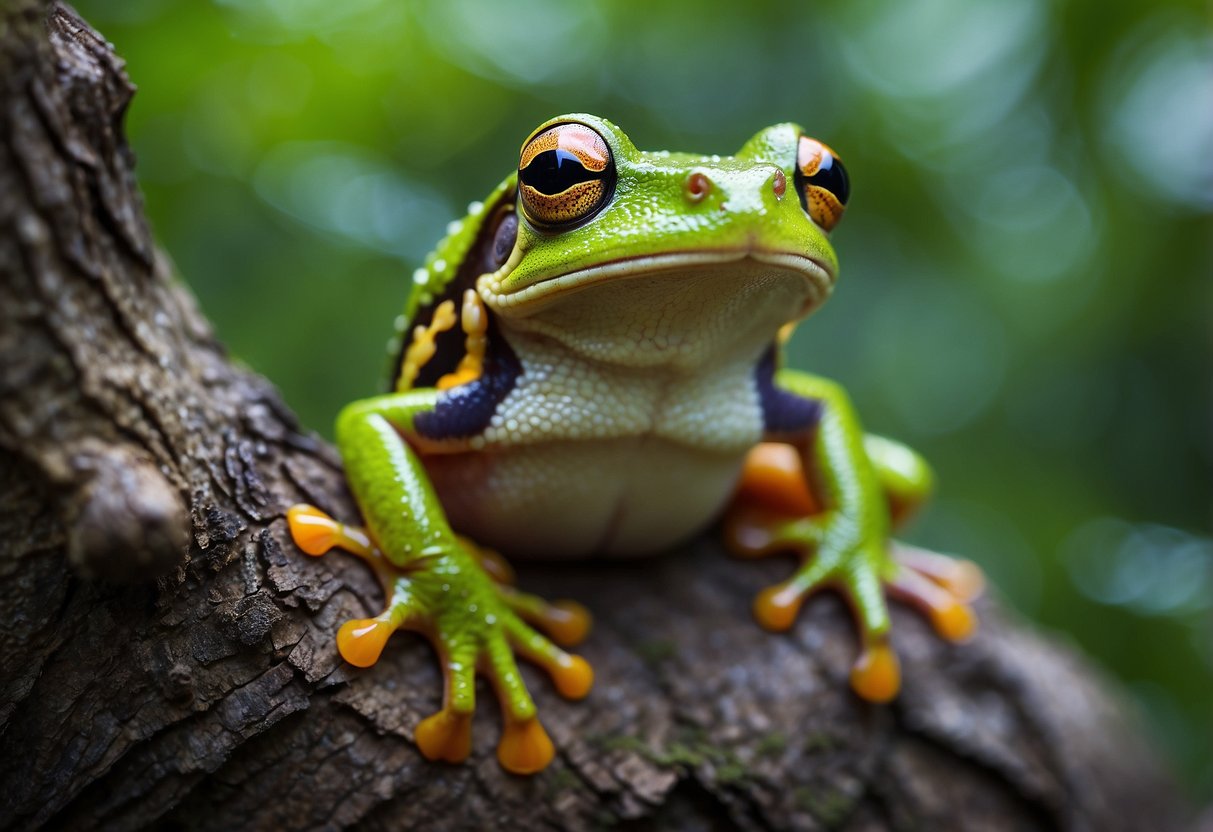
I get a lot of questions about tree frogs in Florida. Let’s dive into some of the most common ones and clear up any confusion.
How many different species of tree frogs can be found in Florida?
There are about 17 different species of tree frogs in Florida. Each species has unique characteristics and habitats, spread across various regions of the state.
Can Florida tree frogs be harmful or poisonous to humans or pets?
Most tree frogs in Florida are harmless. However, the Cuban tree frog can secrete a substance that may irritate human skin and harm pets. It’s always best to wash your hands after handling any frog. Better yet, avoid handling them with bare hands.
What are the distinct sounds made by the various types of tree frogs in Florida?
Tree frogs are known for their choruses. For example, Cuban tree frogs produce a rhythmic, repeated call while the Cope’s gray tree frog creates a rapid trill. Learning these sounds helps in identifying different species.
How can you differentiate between a Cuban tree frog and a native Florida tree frog?
The Cuban tree frog is larger and has warty skin with big toe pads. Native species like the Pine Woods tree frog are smaller and have smoother skin. The Cuban tree frog’s color can also vary greatly, making it a bit trickier to identify.
What is the most commonly encountered species of tree frog in Florida?
The Green Tree Frog is likely the most frequently seen. It has smooth, bright green skin and a distinctive white stripe running from its jaw to its thigh. They’re commonly found in gardens and near water sources.
How do you recognize the larger species of tree frogs that inhabit Florida?
One of the larger species is the Cuban tree frog, which can grow much bigger than native species. In fact, these often compete and sometimes even kill native tree frogs. They have large “bug eyes,” big toe pads, and warty-looking skin. In comparison, native tree frogs like Hyla species are usually smaller and less robust.
Have you encountered any of the many types of tree frogs in Florida? Leave us a comment below!