
Common Myths About Frogs Debunked: Separating Fact from Fiction in Amphibian Lore
Frogs are fascinating creatures that have captured human imagination for centuries. Many myths and misconceptions about these amphibians have spread over time.
Let’s explore some common beliefs about frogs and separate fact from fiction.

One widespread myth is that touching frogs can give you warts. Frogs cannot give humans warts, as warts are caused by a virus that only affects humans. The bumps on a frog’s skin are not warts but glands that help keep their skin moist.
This false belief may have started because of the lumpy appearance of some frog species’ skin.
Many people think all frogs are green, but they come in a wide range of colors and patterns. Some frogs can even change their color to blend in with their surroundings.
Learning about frog biology can help us understand these amazing animals better and appreciate their role in nature.
Key Takeaways
- Frogs do not cause warts in humans
- Frogs come in many colors besides green
- Frogs play important roles in their ecosystems
Dispelling Common Misconceptions
Frogs are fascinating creatures, but myths about them persist. Let’s examine two common misconceptions and uncover the truth about these amphibians.
Frogs Always Cause Warts
Many people believe touching frogs gives you warts. This is not true. Warts are caused by the human papillomavirus (HPV), not frogs. Frogs cannot give you warts.
Frog skin may feel bumpy, leading to this myth. But these bumps are glands that help frogs stay moist. They’re not warts and can’t spread to humans.
Some frogs do secrete toxins through their skin. While these won’t cause warts, it’s best to wash your hands after handling frogs. This protects both you and the frog.
Frogs Need to Live Near Water at All Times
Another common belief is that frogs must always live near water. This isn’t true for all frog species.
While many frogs do need water for breeding and keeping their skin moist, some can live far from water sources.
Tree frogs, for example, spend most of their time in trees. They get moisture from leaves and rain. Desert frogs can burrow underground and create a waxy cocoon to prevent water loss.
Some frogs return to water only to breed. Others absorb water through their skin from damp soil or air. Frogs have adapted to various habitats, from rainforests to deserts.
Frog Biology and Behavior
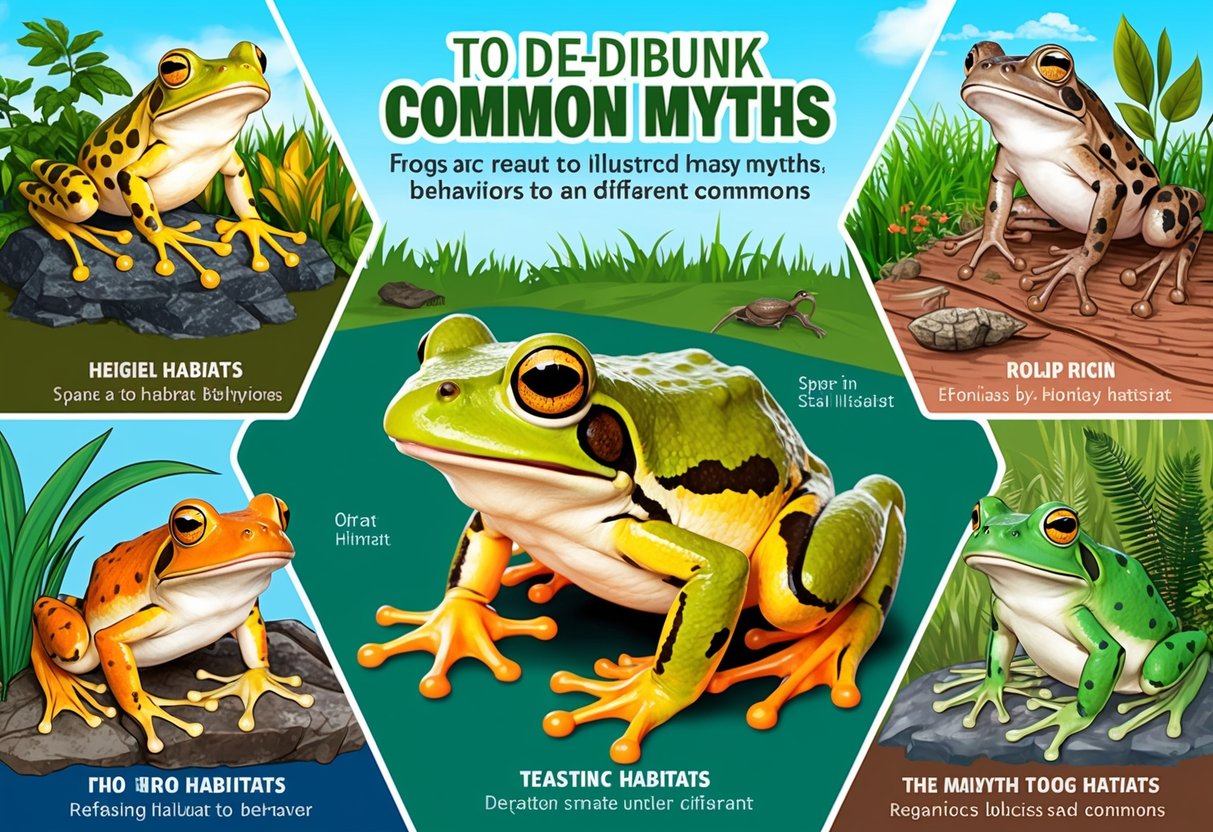
Frogs have diverse colors and movement abilities. Their biology and behavior are more complex than many people realize.
Frogs Are Always Green
Frogs come in many colors, not just green. Some frogs are brown, red, yellow, or blue. Others have patterns like spots or stripes.
Tree frogs can even change color to blend in with their surroundings. This helps them hide from predators.
Poison dart frogs are known for their bright colors. These warn predators that they’re toxic. Their colors range from yellow to blue to red.
Some frogs are see-through. Glass frogs have clear skin on their bellies. You can see their organs inside.
Frogs Can Only Jump, Not Walk
Frogs can move in different ways, not just jumping. Many frogs can walk, climb, and even glide.
Tree frogs have special toe pads. These help them climb and stick to surfaces. They can walk up smooth leaves and glass.
Some frogs are good swimmers. They use their strong back legs to push through water. Webbed feet help them move faster.
A few frogs can glide through the air. Flying frogs spread their toes wide. The skin between their toes acts like a parachute.
On land, many frogs use a mix of walking and hopping to move around. They don’t always need big leaps to get where they’re going.
Frogs in Ecosystems
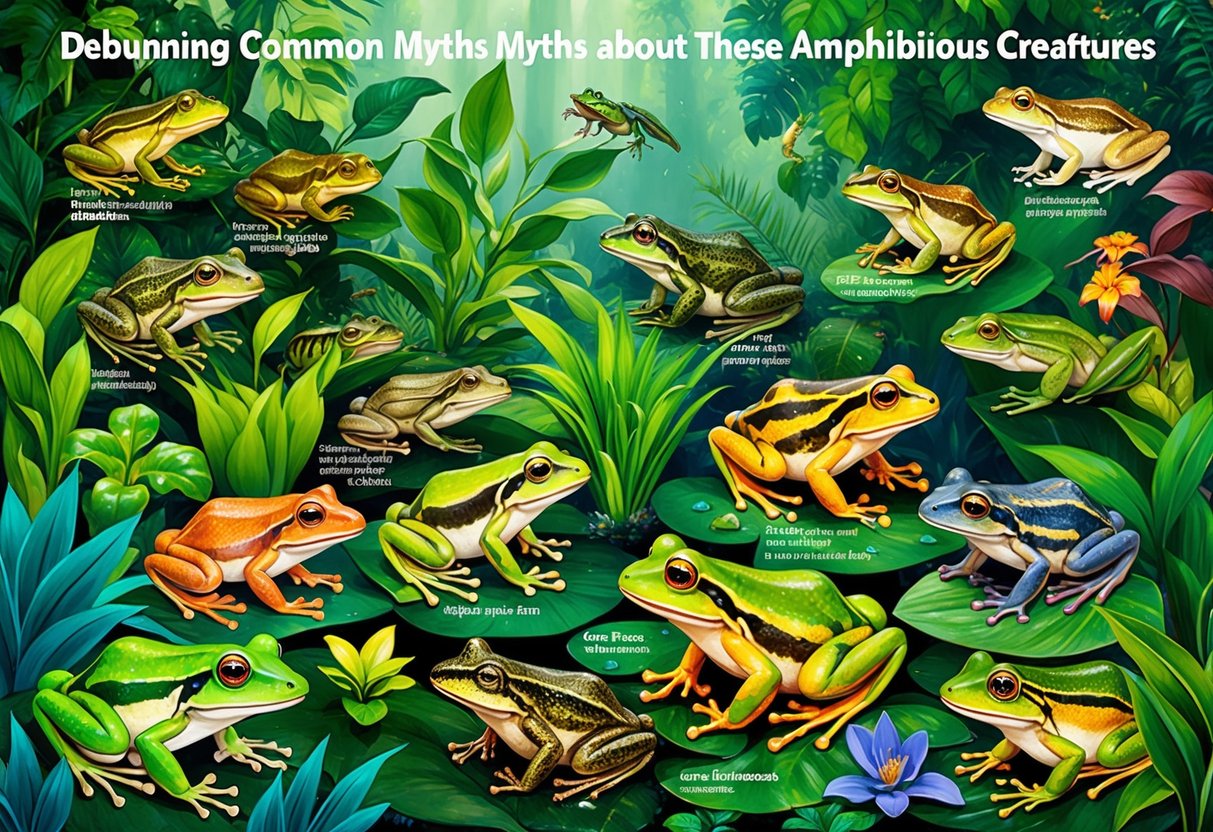
Frogs play crucial roles in their habitats. They act as natural pest controllers and serve as prey for many animals. Their presence or absence can tell us a lot about the health of an ecosystem.
Frogs are Indicators of Poor Environmental Health
Frogs are sensitive to environmental changes. This makes them excellent indicators of ecosystem health. A decline in frog populations often signals problems in the environment.
Frogs have permeable skin that easily absorbs toxins. This makes them vulnerable to pollutants in water and air. When frog numbers drop, it can warn of contamination or other issues.
Frogs also rely on specific habitats to survive. Changes in temperature, rainfall, or land use can affect them quickly. Scientists often monitor frog populations to track ecosystem health over time.
All Frogs Make the Same Sound
Contrary to popular belief, not all frogs sound alike. Different frog species produce a wide variety of calls.
Some frogs croak, while others chirp, whistle, or even bark. These sounds help frogs communicate and find mates. Each species has its own unique call.
The pitch, duration, and pattern of frog calls vary greatly. Some frogs make loud, deep sounds, while others have soft, high-pitched voices. These differences help frogs avoid confusion between species in the same area.
Frog calls can also change based on the situation. A frog might make one sound to attract a mate and another to warn off predators.
Frog Reproduction Facts
Frogs have unique reproductive habits that often surprise people. Their methods of breeding and caring for offspring vary across species.
Frogs Lay Eggs in Water Exclusively
Many people think all frogs lay eggs in water, but this isn’t true. While most frogs do lay eggs in water, some species have adapted to different environments.
Tree frogs often lay eggs on leaves above water. The tadpoles then drop into the water when they hatch. Some frogs lay eggs in moist soil or in foam nests on land.
Dart frogs lay eggs on land and carry their tadpoles to water on their backs. Marsupial frogs keep eggs in pouches on their bodies until they develop into froglets.
Water-dwelling frogs typically lay more eggs than land-breeding species. This helps ensure some survive despite predators and harsh conditions.
Parent Frogs Always Abandon Their Offspring
The idea that all frogs abandon their young is a myth. While many species do leave their eggs after laying, others show surprising parental care.
Some frogs guard their eggs until they hatch. Male dart frogs transport tadpoles to water and return regularly to lay unfertilized eggs as food. Poison dart frogs often care for their young until they become froglets.
Female marsupial frogs carry developing young in skin pouches on their backs. Some tree frogs wrap their eggs in leaves to protect them from predators and keep them moist.
Even among species that don’t provide direct care, adults may choose egg-laying sites carefully to give offspring the best chance of survival.
Human Interaction with Frogs
People often have misconceptions about interacting with frogs. These common beliefs can lead to unsafe practices when handling or consuming these amphibians.
Handling Frogs Is Completely Harmless
Touching frogs isn’t always safe. Many frogs have skin secretions that can irritate human skin or mucous membranes. Some species produce toxins that are dangerous if absorbed.
Frogs can also carry bacteria like Salmonella. This can make people sick if they don’t wash their hands after contact.
It’s best to avoid handling wild frogs. If you must, wear gloves and wash your hands after. Frogs carry different microbes specific to their species and environment.
All Frogs Are Safe to Eat
Not all frogs are edible. Some species contain powerful toxins that can be deadly if eaten.
Frog legs are a delicacy in some cultures. But only certain species are safe for consumption. Common edible frogs include bullfrogs and leopard frogs.
Wild frogs may contain harmful parasites or pollutants. It’s safer to eat farm-raised frogs meant for consumption.
Proper preparation is crucial. Frog meat must be fully cooked to kill potential pathogens. Eating raw or undercooked frog can lead to serious illness.
Frequently Asked Questions
Frogs are often misunderstood creatures. Many myths and misconceptions exist about their potential risks to humans and pets. Let’s address some common questions about frog-related health concerns.
What are the actual risks of disease transmission from frogs to humans?
Frogs can carry bacteria like Salmonella on their skin. This poses a small risk if you handle frogs and don’t wash your hands after. Proper hygiene reduces the chances of getting sick from frogs. Most frog species are harmless to humans when basic precautions are taken.
Is there any truth to the belief that frog urine is harmful to humans?
Frog urine is not inherently harmful to humans. It may contain small amounts of waste products, but these are unlikely to cause problems through casual contact. Washing hands after handling frogs is always a good practice.
What are the consequences of frog skin contact for people?
For most people, touching frog skin has no negative effects. Some frogs secrete mild toxins that may irritate sensitive skin. Washing hands after handling frogs prevents potential issues. Avoid touching your eyes or mouth before washing.
Is there any scientific evidence that frog urine is toxic to dogs?
There is no strong scientific evidence that frog urine is toxic to dogs. Some toads produce toxins that can harm dogs if ingested. This has led to confusion about frog urine. Keeping pets away from wild amphibians is a safe approach.
Are warts a possible result of coming into contact with frog urine?
Frogs do not cause warts in humans. This is a common myth with no scientific basis. Warts are caused by human papillomavirus (HPV), not by frogs or their urine. Contact with frogs or their urine cannot lead to wart formation.
What is the origin of the myth that frogs can cause warts on hands?
The myth likely stems from the bumpy appearance of some frogs’ skin. People mistook these bumps for warts and assumed touching frogs could spread them. The wart-like growths on toads may have added to this misconception. This unfounded belief has persisted despite a lack of evidence.