
Frogs In Space: What We’ve Learned – Surprising Insights from Amphibian Astronauts
Frogs have been surprising subjects in space research for decades. Scientists have sent these amphibians into orbit to study how life adapts to zero gravity.
From early experiments in the 1990s to recent studies, frogs have helped us understand the effects of space on living organisms.
Frogs that were born in space have shown remarkable adaptability, developing almost normally despite the lack of gravity. This finding, reported in a 1995 New Scientist article, suggests that life can potentially thrive in space environments.
More recent experiments have focused on how frogs navigate and remember spatial information in zero gravity conditions.
Space agencies have used frogs to study various aspects of biology in space. These experiments have ranged from observing frog development to testing their navigation abilities when relocated.
The results of these studies provide valuable insights into how different species might adapt to long-term space travel and potential colonization of other planets.
Key Takeaways
- Frogs born in space develop almost normally despite zero gravity conditions
- Space experiments with frogs help scientists understand biological adaptations to space environments
- Studying frogs in space provides insights for long-term space travel and potential colonization efforts
History of Astroherpetology
Astroherpetology, the study of amphibians in space, began in the late 1950s. Scientists wanted to understand how microgravity affects living organisms.
The U.S. Air Force made an early attempt to send frogs to space in 1959. They planned to launch two frogs and 12 mice on a ballistic missile. Sadly, the rocket was destroyed during launch.
In the following decades, researchers continued to study frogs in space. They focused on how microgravity impacts:
- Reproduction
- Embryonic development
- Navigation skills
- Spatial memory
One landmark experiment took place in the 1990s. Scientists successfully bred frogs in space. The tadpoles developed without gravity and grew into normal adult frogs back on Earth.
Frogs have proven valuable for space research due to their well-studied development stages. Their large eggs, over 1 mm in diameter, make it easy to observe key stages of growth.
Recent studies have expanded to examine frog behavior in space-like conditions. For example, researchers tested how relocation affects poison frogs’ navigation abilities.
These experiments continue to provide insights into how space travel might affect various life forms, including humans.
The Biology of Frogs in Zero-G
Frogs have been part of space experiments since the early days of shuttle missions. Scientists wanted to see how these amphibians would cope without gravity.
One key finding was that frogs can adapt to zero gravity. They learn to swim in space, though their movements look different from Earth-bound frogs.
In space, frogs’ bodies don’t have to work against gravity. This changes how their muscles and bones develop. Scientists noticed some changes in muscle structure, but nothing too extreme.
A big question was about frog eggs. Could they develop normally in space? The answer is mostly yes. Frog eggs fertilized in space grew into normal tadpoles.
One interesting behavior observed was how frogs reacted to floating. When first put in zero-G, frogs would often:
- Stretch out their legs
- Spin slowly
- Make swimming motions
Over time, they got used to floating and moved more smoothly.
Frog experiments in space have taught us a lot about how gravity affects animal development. This helps us understand not just frogs, but how other animals, including humans, might adapt to life in space.
Key Experiments and Findings
Scientists have conducted several groundbreaking experiments to study frog behavior and development in space. These studies have revealed surprising adaptations and effects of microgravity on amphibians.
Early Orbital Studies
Japanese tree frogs were among the first amphibians sent to space in 1990. Six frogs spent 8 days on the Mir space station as part of the “Frog in Space” (FRIS) experiment.
Researchers observed the frogs’ behavior in microgravity. The amphibians showed interesting adaptations, like using their limbs to stabilize themselves while floating.
Scientists also studied the frogs’ inner ear structures, which are important for balance. They wanted to see how these organs responded to the lack of gravity.
Reproductive Behavior in Microgravity
Later experiments focused on frog reproduction in space. Researchers were curious about how microgravity might affect mating and egg fertilization.
Frogs successfully mated and laid eggs in orbit. The eggs hatched into tadpoles, showing that reproduction is possible in space.
Scientists monitored the tadpoles’ development closely. They wanted to see if microgravity would cause any abnormalities or changes in growth patterns.
Developmental Changes in Amphibian Larvae
Studies on frog larvae in space revealed some interesting findings. Tadpoles hatched in microgravity showed mostly normal development, despite the lack of gravity.
However, researchers noticed some differences in the space-born tadpoles:
- Slightly altered swimming patterns
- Changes in muscle development
- Modifications in the inner ear structure
These changes didn’t stop the tadpoles from growing into healthy frogs after returning to Earth. This suggests that amphibians can adapt to and recover from extended periods in microgravity.
Implications for Long-Term Space Travel
Studying frogs in space has given scientists valuable insights into how living organisms adapt to microgravity. These findings have important implications for future long-term space missions and the development of sustainable life support systems.
Effects on Frog Physiology
Frogs in space have shown remarkable adaptability. They developed normally despite the lack of gravity, which is encouraging for long-term space travel.
This resilience suggests that other vertebrates, including humans, might also adapt well to extended periods in space. However, there are still concerns about bone density loss and muscle atrophy.
Astronauts can lose 1-2% of their bone mass each month in space. Studying how frogs maintain their skeletal structure could lead to new strategies for preserving human bone health during lengthy missions.
Contributions to Closed Ecological Systems
Frogs play a crucial role in developing closed ecological systems for space travel. These systems aim to recreate Earth’s life-sustaining cycles in a confined space.
Frogs can serve as bio-indicators, quickly showing the effects of environmental changes. Their ability to thrive in space environments makes them valuable components of these systems.
Researchers are exploring how frogs might contribute to waste recycling and oxygen production in space habitats. Their unique physiology could help solve challenges in creating self-sustaining ecosystems for long-term space missions.
Cross-Species Analysis
Scientists have made fascinating discoveries by comparing frogs to other animals in space. These studies reveal important genetic changes that help organisms adapt to microgravity environments.
Comparative Study with Other Animals
Single-cell analysis of frog lungs has provided insights into cell differentiation during metamorphosis. This research helps scientists understand lung development across vertebrate species.
Frogs in space have been compared to fish and other amphibians. Studies show that some fish and amphibian species can successfully mate and fertilize eggs during spaceflight.
Scientists have also looked at how frogs compare to mammals in space. While mammals face more challenges, frogs have shown remarkable adaptability to microgravity.
Genetic Adaptations in Space
Research has uncovered genetic changes that help frogs survive in space. These adaptations affect bone density, muscle mass, and circulation.
Cross-species cell analysis has revealed similarities in how different animals’ cells respond to microgravity. This helps scientists identify common genetic pathways for space adaptation.
Some key genetic changes observed in space-faring frogs include:
- Altered expression of genes related to bone formation
- Increased activity of genes involved in muscle maintenance
- Changes in genes that regulate fluid balance and blood flow
These findings may help in developing strategies to protect human health during long-term space missions.
Challenges in Amphibian Space Research
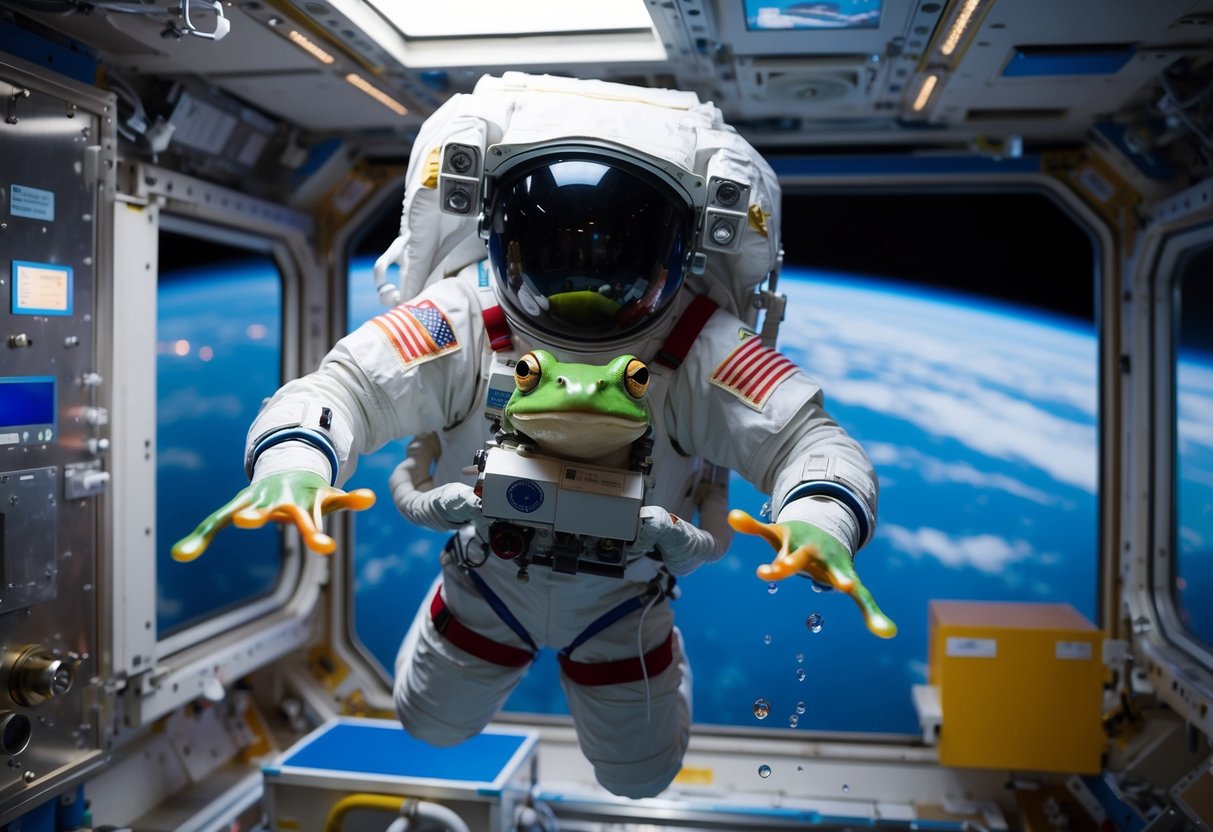
Studying frogs in space presents unique obstacles for scientists. The microgravity environment affects amphibian physiology and behavior in ways that are difficult to predict or control.
One major challenge is designing containment systems that allow frogs to move naturally while preventing escape. Researchers have created special “frog pants” with tracking devices to monitor movement in zero gravity.
Maintaining proper humidity and temperature for amphibians in spacecraft is crucial. Even small fluctuations can impact frog health and experimental results.
Feeding frogs in space requires careful planning. Their typical prey-catching behaviors may not work without gravity, necessitating alternative feeding methods.
Key Research Challenges:
- Adapting life support systems for amphibians
- Preventing specimen escape
- Monitoring frog health in microgravity
- Developing space-friendly feeding techniques
Reproduction and early development of frogs in space is another complex area of study. Scientists must account for how zero gravity affects egg fertilization, embryo growth, and tadpole metamorphosis.
Interpreting results can be tricky. Researchers must distinguish between effects of spaceflight stress and true microgravity impacts on frog biology.
Despite these hurdles, space frog experiments have yielded valuable insights. Frogs hatched in space have shown the ability to adapt and develop normally upon returning to Earth.
Technological Advancements
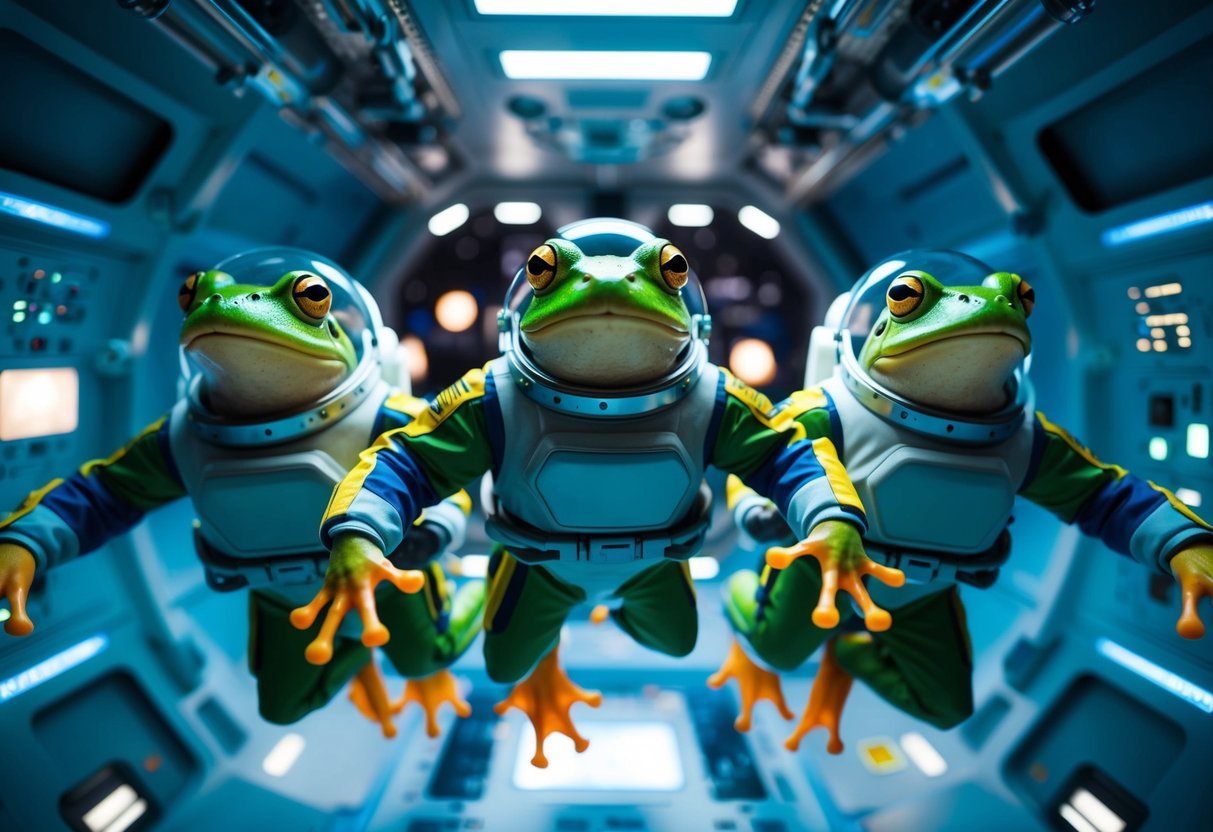
Space missions involving frogs have driven innovations in equipment and monitoring systems. These advances allow scientists to study amphibians in microgravity environments and gather valuable data on their development and behavior.
Habitat Modules for Amphibians
SpaceX missions have led to the creation of specialized habitat modules for frogs in space. These modules mimic Earth-like conditions while accommodating the unique needs of amphibians in zero gravity.
The habitats include moisture control systems to keep frogs’ skin hydrated. They also have specialized lighting to maintain proper day-night cycles.
Feeding mechanisms dispense nutrient-rich food pellets at regular intervals. Waste management systems remove excrement and maintain a clean environment.
Temperature regulation keeps the habitat within the frogs’ optimal range. Some modules even include small pools or water areas for the frogs to swim in.
Remote Monitoring in Microgravity Environments
Scientists have developed advanced remote monitoring systems to observe frogs in space. These tools allow researchers to collect data without disturbing the animals.
High-resolution cameras capture detailed images and videos of the frogs’ movements and behavior. Infrared sensors track the frogs’ body temperature and activity levels throughout the day.
Sophisticated equipment measures changes in the frogs’ muscle mass and bone density. This helps researchers study the effects of microgravity on amphibian physiology.
Automated systems record and transmit data back to Earth in real-time. This allows scientists to make quick adjustments to the habitat if needed.
Educational Outreach and Public Engagement

Space agencies recognize the importance of educating the public about frog experiments in space. They use various methods to share information and engage people of all ages.
One key approach is developing educational programs focused on space science. These programs often include lessons about frog studies in microgravity environments.
Planetariums and science centers play a vital role too. They create exhibits and shows that highlight how frogs adapt to space conditions. These venues make complex concepts accessible to wide audiences.
Space agencies also leverage digital platforms. Websites, social media, and apps provide updates on frog-related space research. This allows people to follow experiments in real-time.
Many outreach efforts target students specifically. Some examples include:
- Classroom presentations by scientists
- Virtual field trips to space labs
- Hands-on activities simulating frog experiments in space
NASA’s STEM engagement initiatives often incorporate frog research findings. This helps inspire the next generation of space scientists and researchers.
Public events like science fairs and space exhibitions frequently showcase frog studies. These events allow people to interact with researchers and learn about the latest discoveries.
Future Prospects of Frogs in Space Research
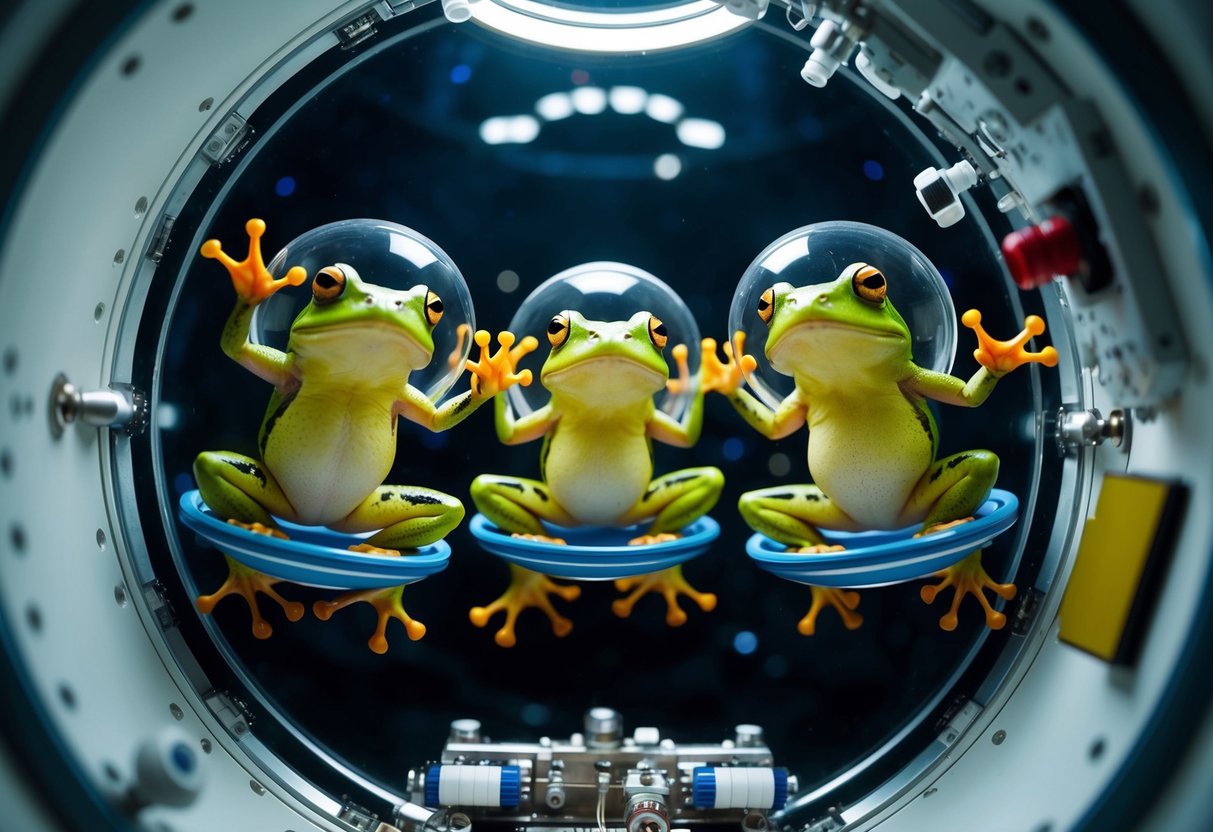
Scientists continue to explore the potential of frogs in space research. These amphibians offer unique insights into how living organisms adapt to microgravity environments.
One promising area is the study of frog hibernation and muscle preservation. Researchers are investigating how certain frog species maintain muscle mass during long periods of inactivity. This could lead to breakthroughs in preventing muscle loss in astronauts during extended space missions.
Another focus is on frog balance systems. Building on past experiments like the Orbiting Frog Otolith mission, future studies may reveal more about how vertebrates adjust to the absence of gravity.
Genetic research on frogs may also play a role in space exploration. Scientists are examining frog genes that could help humans adapt to space travel. This research might lead to new ways to protect astronauts during long-duration missions.
Future experiments may include:
- Breeding frogs in space to study multi-generational effects
- Testing frog immune systems in microgravity
- Exploring frog regeneration capabilities in space environments
These studies could provide valuable data for human space exploration and contribute to our understanding of life in extreme conditions.
Frequently Asked Questions
Space-based frog experiments have yielded important insights into biology and physiology in microgravity. Scientists have studied how frogs adapt to zero-gravity environments and how space affects their development.
What have studies conducted in space revealed about frog physiology?
Frogs in space have shown remarkable adaptability. Those conceived and hatched in microgravity developed mostly normally despite the lack of gravity.
This suggests frog physiology can adjust to extreme environments. It provides clues about how other organisms might fare in space.
What was the purpose behind sending frogs to outer space?
The main goal was to study how frogs’ balance systems adapted to life without gravity. Scientists wanted to understand the effects of microgravity on vertebrate development and physiology.
These experiments helped researchers learn about potential issues for long-term human spaceflight.
How have orbital experiments with frogs advanced scientific understanding?
Frog experiments in space have expanded knowledge of how living organisms respond to microgravity. They’ve shown that vertebrates can develop and function in space environments.
This research aids in preparing for future long-duration space missions and potential space colonization.
What impact did space travel have on the biology of the frogs?
Space travel affected frog biology in various ways. Some frogs were subjected to artificial gravity by being spun at up to 50 revolutions per minute.
Despite these extreme conditions, many frogs showed remarkable resilience and adaptability to the space environment.
In what way did the Orbiting Frog Otolith experiment contribute to space biology?
The Orbiting Frog Otolith mission launched in 1970 to study how frogs’ balance systems adapted to microgravity. It focused on the otolith, an organ in the inner ear that senses gravity and motion.
This experiment provided valuable data on how vertebrates might adjust to extended periods in space.
What role have frogs played in the history of space animal research?
Frogs have been part of space research since the early days of space exploration. In 1959, the Air Force included frogs in a rocket launch alongside mice.
Since then, frogs have been crucial in studying the effects of microgravity on vertebrate biology and development.